Categories
Blog

Deep Adaptation recommended reading

1. Book “Deep Adaptation: Navigating the Realities of Climate Chaos”

The report, edited by Jem Bendell and Rupert Read, provides the latest update over a range of areas, UK based but with a strong global & local orientation and recognition of the exacerbation of inequalities brought about via climate change.

https://www.wiley.com/en-gb/Deep+Adaptation%3A+Navigating+the+Realities+of+Climate+Chaos-p-9781509546855

It provides an up-to-date scientific assessment which is strong enough for editors and contributors to accept that, painful though it is to write or say – and harder still to accept – we are facing the inevitable or probable collapse of civilisation as we have known it (the two authors differ on whether ‘inevitable’ or ‘probable’). This is attendant, of course, with feelings of grief and despair, fully acknowledged in the book. In fact, our actions emanate from our feelings not our intellect.

2. Online article “What next on climate? The need for a new moderate flank”

The necessity now is therefore for deep or transformative adaptation, explained briefly in an article by Rupert on the need for a ‘moderate flank’ of which BCAG might well see itself as a part:

https://systems-souls-society.com/what-next-on-climate-the-need-for-a-moderate-flank/

Categories
News

Council Climate Scorecards

Update 26 October 2023: The scorecards have been recalculated this year, and Barnet is now doing better. The web address has also changed: see
https://councilclimatescorecards.uk/councils/london-borough-of-barnet/ and
https://cape.mysociety.org/councils/london-borough-of-barnet/.


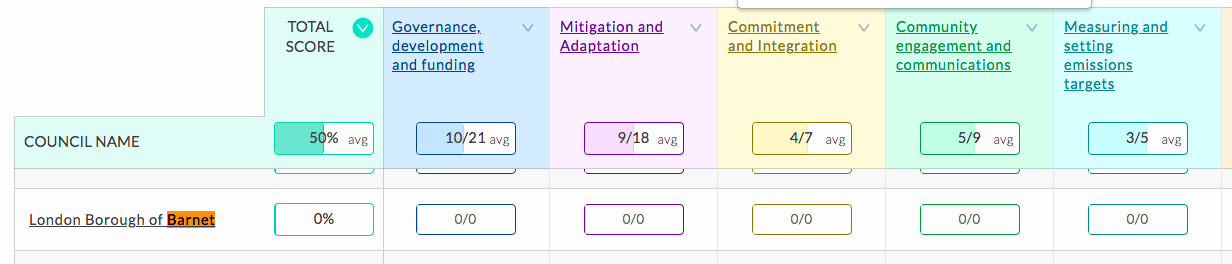
table showing Barnet council scoring zero in all five climate plan categories

New research by Climate Emergency UK assessed council climate action plans according to 28 questions across nine sections, based on the expert-approved checklist. Each council was marked against these criteria and given a right to reply before the scores underwent a final audit. This work was completed between June and December 2021.

Barnet Council was given a 0% rating.

Categories
Meeting Notice

February 2022 Meeting – A Sustainability Strategy for the London Borough of Barnet

Update 2 February: the presentation on Barnet Council’s recently released Sustainability Strategy Framework is now available. (PDF 580 Kb, 19 slides)

Our February meeting is on Tuesday 1st February 2022 from 6.30pm to 7.30pm online.

Please book on Eventbrite at https://www.eventbrite.com/e/a-sustainability-strategy-for-the-london-borough-of-barnet-tickets-254382814847. A Zoom link will be sent to all registered participants.

Presentation and Discussion on Barnet’s Forthcoming Sustainability Strategy for the Borough

Barnet Council’s Sustainability Strategy Framework was unanimously passed through at their Policy and Resources Committee meeting on 9 December 2021.

The Sustainability Strategy itself is expected to be released by Barnet Council in early 2022.

Ahead of the 9 December Committee meeting, BCAG posted a briefing paper on the Framework document (available here – which includes links to the Framework document) and set out a series of questions relating to the Strategy – a number of which were highlighted by Councillors at the Committee meeting. Also see Barnet Borough Times report on the meeting and Framework here.

January 2022’s BCAG meeting will provide a presentation and discussion on the Framework document and forthcoming Sustainability Strategy.

A zoom link will be sent to all registered participants closer to the time of the event.

Categories
Blog

Barnet Sustainability Framework Note December 2021

Update 23 December 2021

  • Barnet’s Sustainability Strategy Framework was unanimously passed through at their Policy and Resources Committee meeting of 9 December (details below).
  • A number of points raised by Councillors (highlighted in the press story from the Barnet Borough Times Barnet Council ‘to achieve net zero emissions by 2030’) were set out in our BCAG briefing paper that we posted online ahead of the meeting, see below.
  • The report also states that “The council will carry out public engagement with residents to allow them to shape the development of the strategy in the new year. A public consultation will then be held in the spring, before the strategy is adopted by the council.” BCAG will be looking to take an active role in responding to this public consultation.

BCAG will be reviewing the Sustainability Strategy Framework in our January 2022 online meeting: a date for this meeting will be announced shortly. We look forward to seeing you then.


At Barnet Council’s Policy and Resources Committee (PRC) meeting, taking place on 9 December 2021, the agenda will include some long awaited detail on Barnet’s forthcoming Sustainability Strategy, said to be released in the new year. BCAG have produced the forthcoming briefing note on the Framework document and sets out some key requirements to ensure the Strategy is a success.

Download Barnet Sustainability Framework Note December 2021 (PDF 575 Kb, 6 pages)

Categories
Meeting Notice

November 2021 Meeting — Air Source Heat Pumps

Living with an Air Source Heat Pump (ASHP)

Update: We had a second speaker Jesse Scharf as well as Jonathan Waxman as originally advertised. Here are their slides:


Our November meeting is on Wednesday 24th November 2021 from 7pm to 8pm online.

Please book on Eventbrite at https://www.eventbrite.com/e/living-with-an-air-source-heat-pump-ashp-tickets-211638726127. A Zoom link will be sent to all registered participants.

Air Source Heat Pumps (AHSP) are a low carbon technology to heat homes – what is it like living with one?

There has been much in the press of late around the end of gas heating and a shift to new home heating solutions from heat networks to heat pumps. The Prime Minster has stated that there will be ban on all new gas boilers in new build properties from 2025 and a ban on gas boilers being fitted into all homes from 2035.

The Government has set a target for annual installations of heat pumps in 600,000 homes by 2028 – a 20 fold increase over the current rate of installs. Many of these are planned to be added in new build homes – but at least a third are hoped to be retrofitted into existing homes. A new Boiler Upgrade Scheme is to be introduced in April 2022 to support the deployment of low-carbon heat in existing buildings. This will provide households with £5,000 grants when they switch to an air source heat pump (ASHP) or £6,000 when they switch to a ground source one.

Jesse Scharf and Barnet resident Jonathan Waxman have both recently had ASHPs installed in their homes and will be providing some insights on the process leading up to the choice of a heat pump, the installation process and kit, costs, and the differences in heat your home with a heat pump as compared to a conventional gas boiler.

Background Reading

Which guide to ASHPs

Heating and Building Strategy (October 2021)

Categories
Event Meeting Notice

September 2021 Meeting — Updates and Organising

The September meeting of Barnet Climate Action Group is a chance to hear updates from members about their activities, and to organise our plans for the future. It will be held on Zoom on Tuesday 28th September 2021 at 6.30pm. Those on our mailing list will have received the Zoom details. If anyone else would like to join us, please get in touch via the email address at the foot of the page.

We will be covering:

  • An update on Barnet’s Sustainability Strategy
  • BCAG communications with Barnet Council
  • Friends of the Earth communications with Barnet Council
  • Barnet Local Plan
  • Forward looking plan on environment issues national/local
  • Supporting the work of BCAG
  • Phone Hubs
  • AOB
Categories
Report

Barnet Local Plan Response

The Barnet Climate Action Group has prepared a response to the latest consultation on the Barnet Draft Local Plan. Full details of the Local Plan and the consultation are on the council’s web site https://engage.barnet.gov.uk/local-plan-reg-19 .

The BCAG response is here: BCAG Barnet Local Plan Response Aug 2021.pdf (PDF 258 Kb, 4 pages).

BCAG does not believe that the Barnet Draft Local Plan goes far enough in tackling climate change. The challenge of reducing carbon emissions of new build – and opportunities to use new build to reduce emissions of nearby existing buildings though the use of heat networks/decentralised energy options – across the borough are not fully addressed in the Local Plan.

While the Barnet Draft Local Plan is stronger on adaptation measures, BCAG believe there is more that needs to be done to protect the borough’s communities and infrastructure from the impacts of climate change.

Categories
Blog

Local Plan Briefing Note

Barnet Councils new Local Plan sets the Council’s vision for growth and development in Barnet over a 15-year period (2021-2036). It is out for consultation and representations until 9th August 2021. https://engage.barnet.gov.uk/local-plan-reg-19

Update 29 September 2021: The new Local Plan has now moved on to the next stage following the consultation on the Regulation 19 Draft Local Plan. You can follow progress on the Barnet council web site.

Update 10 August 2021: see BCAG response to local plan.

Is it important?

Yes! The Development Plan is the basis upon which planning applications in the Borough will be determined. In the next 15 years that means some 60,000 decisions taken by the Council involving the development of new homes, the amount of affordable housing, loss of open space, new businesses, how Barnet will look, its ‘character’, how it tackles Climate Change, biodiversity, wildlife, transport, energy etc will all be affected by it.

This version of the Local Plan is a draft document specifically produced to enable representations to be made on the draft plan that will then be considered by an independent Inspector at the examination stage. Written representations and appearing at the public examination are supposed to carry the same weight.

The draft plan is a technical document but do not let that put you off. If it does not say what you think it should – or says something you think it shouldn’t then make a representation. If you want to change Barnet’s policy at this stage keep in mind that you should have good grounds and sound evidence to back up what you say – just having an opinion won’t wash!

What key areas does it cover?

Pretty much anything and everything to do with the built and natural environment in Barnet. Chapter headings include:

  • Barnet’s Vision and Objectives
  • Growth and Spatial Strategy
  • Housing
  • Character, Design and heritage
  • Town centres
  • Community Uses and promotion of health and well being
  • Economy
  • Environment and Climate Change
  • Transport and Communications

How is the plan structured?

The Plan contains:

  • 309 Pages
  • 12 Chapters
  • 3 Appendicies
  • 52 Policies and supporting text
  • 67 Site Specific proposals

What is the key driver behind the plan?

By 2036 Barnet is looking at a projected population increase of over 50,000 up to a total of 452,000. This will need a minimum of 35,460 new homes (2,364 new homes per annum). Barnet’s Plan seeks to enable this growth and deal with the implications of it.

Are Barnet’s parks, open spaces and biodiversity protected?

The policy approach should be strengthened. The important part of the plan – the one in daily use by planners in determining applications and considered by developers is the Policy. In this plan the supporting text often reads stronger than the policy.

[The original document contains copies of eight policies in the appendix which appear to have a significant bearing on open spaces, biodiversity and parks in the borough. These are omitted from the web version]

Areas to consider for representations.

  • Oppose “low value, low quality” provisions in Policy ECC04. We should be protecting and enhancing all open space in the borough not allowing development on it. The ‘evidence’ to justify this policy is out of date, extremely subjective in its judgements and should not be used. Recommend removal of this element of the policy.
  • A Regional Park for Barnet based on the Green Belt. The idea has been around for many years but the there is nothing specific on how and when it will be delivered. The messages given in the plan on this are garbled. Recommend much clearer statement on how this is to be progressed.
  • Hedges get limited mention and Trees are subsumed within generalised policies. Recommend strengthened, separate policy on dealing with Trees and hedgerows.
  • B-lines – No mention of these pollinator highways, promoted by Buglife as part of the Governments pollinator strategy. The north-south corridor through London cuts across parts of the borough including parts of Finchley and New Southgate where there is a growth area and a number of site specific proposals. Recommend add B-lines to Key diagram, proposals map and covered in appropriate policies and site specific proposals.
  • Temporary use of development sites for green space. There is a policy on ‘meanwhile uses’ for temporary housing but not on potential for open space. Recommend new policy supporting temporary use of development sites for open space and community growing projects.
  • Front garden use for car parking. No policy on prevention of turning front gardens into car parking on those roads where planning permission is required. Recommend addition of policy opposing use of front gardens for car parking.
  • Support reasonably strong policies protecting Green Belt and Metropolitan Open land. The likelihood is that these policies will be attacked by developers.
  • Consider whether you should be promoting sites/ideas near to you. Two that I shall be promoting are: Creation of a new park in East Finchley in an area of open space deficiency and designating Barnet owned land adjacent to a local park as an extension to the park.

There are probably a lot more ideas that could and should be raised.

Use the forms provided.

Barnet are using a form for representations based on nationally prescribed ones. Do use them. It makes life easier all round.

Roger Chapman

Chair, Barnet Green Spaces Network

6th July 2021


The appendix of the original document contains the text of the following policies relevant to Open Space. These are omitted from the web version.

  • POLICY BSS01 Spatial Strategy for Barnet
  • POLICY GSS13 Strategic Parks and Recreation
  • Policy CDH07 Amenity Space and Landscaping
  • Policy CHW 02 – Promoting health and wellbeing
  • Policy ECC02A Water Management Policy
  • Policy ECC04 –Barnet’s Parks and Open Spaces
  • Policy ECC05 – Green Belt and Metropolitan Open Land
  • Policy ECC06 – Biodiversity
Categories
Event Meeting Notice

June 2021 Meeting — Nudging Barnet

Nudging Barnet: Behaviour Change and the Climate Emergency

Our June meeting is on Wednesday 16th June 2021 from 6pm to 7.30pm online.

Please book on Eventbrite at https://www.eventbrite.com/e/nudging-barnet-behaviour-change-and-the-climate-emergency-tickets-157198846983. A Zoom link will be sent to all registered participants.

Introducing “positive” behaviours in residents and businesses in Barnet to encourage initiatives to reduce climate impacts.

This month’s Barnet Climate Action Group (BCAG) meeting will discuss opportunities in Barnet on measures, information and “nudges” that could be introduced to support “positive” behaviours in residents and businesses in the borough to encourage initiatives to reduce their climate impacts.

The discussion will be led by Dr Simon Moore of behavioural science experts Innovation Bubble.

The UK has reduced greenhouse gas emissions by 40% since 1990 but this progress has come largely from actions that have not involved consumers changing their behaviour – notably decarbonisation of electricity supply. Over the coming decade there will be a need to shift focus to other more challenging sectors of energy use such as decarbonising transport and heat which will require more more intervention in our lives.

The Committee on Climate Change (CCC) are also pointing to other areas where public action will be needed such as a reduction in the consumption of all meat and dairy of 50% by 2050 compared to today’s levels, a reduction in flying of 10% compared to pre- COVID levels, and up to one third of all car journeys being replaced by walking, cycling or public transport

The role of individual behaviour change will be important if the UK is to achieve Net Zero and there is now an urgent need to identify and implement solutions for promoting greater engagement and action from citizens and consumers.

You may be interested in reading Prof Nick Chater recent report from the CCC ‘Net Zero after Covid: Behavioural Principles for Building Back Better

Categories
Report

One Plastic Bottle Doesn’t Matter Does It?

Notes from Breakout Session 1 – 16th May 2021

Presentation: Waste BCAG May 21.pptx (PowerPoint 800Kb)

Notes:

A suggestion came from Julia Hines around help setting up a ‘library of things’ in East Finchley, which could be a ‘tool library’. Library of things could be set up at the local, neighbourhood level.

Attendees highlighted a series of existing projects within the community such as:

www.no2plasticsn2.com – East Finchley group which works with shops and businesses, encouraging less packaging and refillable bottles of , eg olive oil.

A Zero Waste Market taking place in Barnet on 23rd May: https://www.barnetsociety.org.uk/will-new-barnet-lead-the-way-with-borough-s-first-zero-waste-food-and-flowers-market

This led to a wider discussion about the need to share and exchange information on reducing waste, such as more information on how and what to recycle, as well as encouraging people to use local shops which are actively cutting down on packaging, especially zero waste shops.

Several contributors suggested that there needs to be an information exchange about such initiatives and campaigns, including September’s Big Green Week: https://greatbiggreenweek.com/

People also shared information about TerraCycle, who recycle crisp, sweet and biscuit wrappers: https://www.terracycle.com/en-GB/

There was also a recommendation for Olio, a recycling app: https://olioex.com/

Wendy from Incredible Edible Barnet talked about the value of teaching people to start growing some of their own food – it reduces food miles, reduces packaging, helps people engage with nature and encourages them to value the time and energy it takes to produce what they eat, thereby often influencing them to throw away less.

It also improves our food security. More food should be sourced locally, it is better, fresher and uses less transportation. Returning to theme of educating and informing people – it was suggested that there could be more information on how to start their own compost heaps.

There was a discussion about the need to put pressure on supermarkets, as most people buy the majority of the things they consume from them. Points raised here included:

  • Write them letters. Tell them we want an end to single use plastics, unnecessary wrapping. Why are some products cheaper when wrapped in plastic than alternatives that are sold loose?
  • Ask them to introduce stations which dispense loose items into brought-in reusable containers – as some small shops already do.
  • More recycling points.
  • Get them to agree to reduce waste of such items as bread.
  • Start a campaign, collect signatures to demand the supermarkets make surpluses available to the local community and ask them to place this in community fridges.

There was also a need to put pressure on manufacturers to make items that can have be more durable and be used for longer use, and to penalise them for short life items, such as  washing machines that only work for a few years. Making them pay for the cost of disposal of white goods and electricals was also supported.

The use of and promotion of repair shops was also supported. People highlighted the Restart Project which has taught people how to make their own repairs by running repairing workshops

The group was also supportive of putting pressure on the Council to reintroduce a food waste collection. Alan Schneiderman says there has not been a commitment to bring it back, the council leaders say there has been ‘low take-up’ but a third of residents were using the service when it was scrapped – which itself cost the council money in terms of having to collect and incinerate the additional waste.

People agreed that we need to think about what we buy.

Notes and suggestions from the Jamboard:

Screen with lots of virtual post-it notes. Sorry there is too much text to transcribe.
Click image to see the same image on a page by itself, which may be easier to zoom in to

5 Actions for us:

We need to share information about the need to reduce waste, the existence of local zero waste shops and markets, the impact that changing your diet can have, and the projects that already exist across Barnet that are taking action around reducing waste.

We need to take action ourselves, by setting up community ‘libraries of things’, setting up local projects on food waste and by consuming less stuff.

We need to support our local shops that are setting a good example, by using repair shops and zero waste stores whenever we can.

We need to grow our own by encouraging gardening, composting and growing own fruit vegetables. We also need to set up collective community gardens and allotments.

We need to say no to single use plastics – especially in shops and supermarkets.

3 Actions for others:

Barnet Council needs to take action to support the reduction of waste generated by residents and to increase the ease and rate of recycling through better services and improved information. Barnet Council should reintroduce the collection of food waste as soon as it can.

Manufacturers and producers need to make things that will last longer, are repairable, and take responsibility for the disposal of items when they reach the end of their useful life.

Supermarkets need to drastically reduce the amount of waste they generate and adopt zero waste practices, by ending the use of single use plastics, reducing packaging, introducing refill stations, finding uses for items that need to be thrown away (such as through community fridges).