By Dennis Ayling, September 2026
Today is the Fourth of July 2026. I have chosen this moment to ponder my grandchild's journey towards independence. It is America's 250th birthday, so this day will rightly be lauded as a historic occasion. I wish all Americans, and especially, my stateside relatives a very happy celebratory day. I hear Damon, my neurodivergent grandchild, is going to take a fun ride on a Fort Collins vintage trolley today. These electric-powered streetcars date back to 1919. I am reminded of the long-gone eco-friendly London trams and the later trolley buses of my own 1950s childhood. Riding the latter, across the capital, to visit my grandmother was a thrilling adventure during my early years. Delightfully, Damon often has me recalling my infant-self in this manner. I hope, like Judy Garland, he will "lose a jolly hour on the trolley". More than that, I wish, I imagine we all wish, our collective legacy for his generation to be a happy one, with a restored and stable planet driven by the much hoped for recovery of America's irrepressible optimism and can-do spirit. In celebrating Independence Day we are reminded that the pursuit of happiness was asserted as an unalienable right in the Declaration of Independence.
Last night, on the eve of Independence Day, in the darkness at Mount Rushmore, a sermon garishly gilded with McCarthyism was delivered. "Communism is a mortal threat to American liberty," it intoned. "It is the greatest threat to our country, including World War I, World War II, Pearl Harbor or even 9/11," said the President of the United States. Yet, there was no mention of the genuine impending global threat to us all. The US President chooses to be in the dark about climate change, by recklessly rejecting the scientific consensus stating that the burning of fossil fuels is causing global warming. He is now leading a huge cohort of politicians and other powerful individuals, along with some vastly rich organisations, in denying the scientifically proven reality of climate change. This is immoral in that he is not only prejudicing the next generation's pursuit of happiness, but he is gravely risking their survival at all.
As I write, I have the television news on in the background updating me about the 250th anniversary celebrations in America. Weirdly, the news has reported that it is currently hotter in Washington DC than in the Gobi and Sahara Deserts. As America's 250th birthday continued, a violent storm disrupted some of the capital's anniversary events and closed down others. In the face of the 47th President of the United States trying to suppress the truth and, additionally, all protest, it would seem Mother Earth herself is raining on his parade.
The 45th President of the United States withdrew America from the historic Paris Climate Agreement aimed at holding global warming well below 2 °C above pre-industrial levels. He repeated this dire act of folly, again withdrawing his country from the Paris Agreement on the first day of his tenure as the 47th American President. As leader of the free world, he is notorious for his habit of blatantly lying about all manner of things. He has called climate change "[the] greatest con job ever perpetrated on the world". Let us ponder, for a moment, the enormity of that criminal lie for the sake of Damon and his generation's right to survival, let alone the pursuit of happiness. The United Nations Intergovernmental Panel on Climate Change (IPCC) declared that exceeding 1.5 °C will unlock extreme weather events – frequent and severe droughts, searing heatwaves and torrential rainfall. The consequence of which will be catastrophic wildfires and devastating floods on a huge scale. Conversely, the IPCC predicts that limiting warming to 1.5 °C significantly reduces geographic range loss for insects, plants, and vertebrates compared to 2 °C. The President's response in addressing the UN was, "All of these predictions made by the United Nations and many others, often for bad reasons, were wrong. They were made by stupid people that have cost their countries fortunes and given those same countries no chance for success. If you don't get away from this green scam, your country is going to fail." He has become a hugely demotivating force with his policy of US economic protectionism versus the task of fixing the global climate crisis. In November 2025, COP30 showed the 'leader' of the free world a red card over his appalling abdication of responsibility with regard to climate change but, as we now know, he is no respecter of red cards or of commonly held rules. The UK prime minister at the time, Sir Keir Starmer, noted the consequent waning of unified international support on climate change, warning "today sadly, that consensus is gone."

Yet, children across the globe, like Damon, with his love of the great outdoors, informed by the vital wisdom of indigenous peoples, understand the need to care for our planet home and provider. Each of our individual lives depends on a complex of cellular chemistry. These physiological molecular reactions can only occur within a very restricted temperature range of a few degrees. This is starkly clear when we become ill. A few degrees awry and we die. And, so it is with the complex ecological systems of our planet. Foolishly, we have pushed Mother Earth to her sustainable limits. The UN's IPCC has stated "To limit global warming to 1.5 °C, greenhouse gas emissions must peak before 2025 at the latest and decline 43% by 2030." Clearly, we are fatally off track in heeding this stark scientific diagnosis of Mother Earth's health.
Under the extended July heatwave, currently punishing Europe with exhausting temperatures, I am making very slow progress in writing this piece. Daylight temperatures in my top floor studio flat have been at 90 °F (32.2 °C) or more, whereas night time levels have rarely fallen below 80 °F (26.6 °C) in my room. Tomorrow is the final of the US hosted FIFA World Cup. Meanwhile, large parts of the USA are suffering deadly air pollution drifting down from over 800 wildfires burning across Canada due to a climate change-related heat dome sitting over the country. Many major US cities, including Washington DC, have been smothered by smoke. This smoke, containing a mixture of harmful minute particles and toxic nitrogen dioxide gas, is seriously hazardous to humans. It should be noted that as the US President complains about "filthy, polluted, and unhealthy air" coming from his northern neighbour, and threatens trade sanctions on Canada, wildfires burn across 12 American states.
Suddenly, I have another of those early flashbacks inspired by Damon. I am reminded of my childhood again and the excitement of going to the Saturday Morning Pictures. Back then, long before television became a common feature of family life, local cinemas put on film showings for children. I mostly recall comedies, featuring the likes of Charlie Chaplin and Laurel and Hardy. There were longer B movies too, generally Westerns. Their simplistic plots were invariably based on the goodies defeating the baddies. Perversely, it was Native Americans that were invariably portrayed as the baddies, war whooping their way across the screen of my local Playhouse Cinema back in the 1950s. My generation lapped up this whitewashing of US history where the courageous white cowboys routinely defeated the bloodthirsty red savages. These early Westerns were used to literally sell us (for a pocket money sixpenny piece) the foundational myth of America. Portraying Native Americans as baddies served to justify land theft and the displacement of indigenous tribes. Mount Rushmore and the Black Hills of Dakota, where the President recently delivered the 250th Anniversary Speech of the Founding of America, are a case in point. It was formerly the homeland of the Lakota Sioux. In the Treaty of 1868, the US government disingenuously promised the Sioux this region, along with the entirety of the Black Hills, in perpetuity.
In 2026 the political mistreatment of indigenous peoples continues across the globe. Only days after the President's Mount Rushmore speech, "On July 13, the residents of Namaygoosisagagun First Nation in Northern Ontario watched a massive wildfire jump the rail line near their homes. Facing an approaching 350,000-hectare fire, just over two dozen people who were in the community at the time could not wait for official evacuation co-ordinates, government transport or provincial emergency alerts. Instead, they evacuated entirely by boat, carrying only what they could hold. While every member survived, their community was entirely destroyed." Shocking in itself but scandalously outrageous when you understand it was tribal communities around the world who first reported the early signs of climate change. It was only in the fourth IPCC Report of 2007 that the experience and observations of indigenous people were first included. Yet for generations the Inuit monitored the thinning of arctic sea ice. For centuries, Amazonian tribes had used sophisticated ecological calendars based on the heliacal rising and setting of stars to time their agricultural cycles consisting of clearing, burning, planting and harvesting. These tribes had noted that seasonal changes, particularly the rise and fall of rivers and associated alluvial plain flooding, occurred under specific constellation patterns. After the 1970s, their trusted ecological calendars became unreliable as climate change took hold. Similarly, Aboriginal rock art is a rich source of environmental and climate information. Paradoxically, this invaluable outdoor art, that is assisting our current understanding of human-induced climate change, is now being widely destroyed by the effects of global warming.
There is now a firm working partnership between our planet's indigenous peoples and the international scientific community. Thankfully, the long-standing environmental observations and traditional ecological wisdom of Earth's tribal peoples are complementing the revealing investigations of contemporary climate science. Conversely, and worryingly for Damon and his generation, this combined ancient and modern consensus of environmental insight is not embraced by a significant number of the current political elite. It turns out there really are distinct goodies and baddies in today's warming and wobbly world. The simplistic westerns of my childhood were not so naive after all, only now the former red villains are today's green champions. It is the war whooping US commander-in-chief and his international band of renegade politicians who are the real villains. Rightly, Damon's movie heroes will be the complete reverse of mine.
It so happens there was one very different and exceptional movie released during my childhood. However, it was not shown at any of my Saturday morning cinema treats. It was not available to me back then to challenge my misguided boyhood views. I had to wait until adulthood to encounter the revolutionary High Noon. Ironically, it was a movie hated by cowboy 'hero' John Wayne. Why, in heaven's name, when it was certainly not just another B movie? Rather, it was an A movie in every sense, winning four Academy Awards out of the seven nominations it received. Wayne felt it was 'un-American' in its portrayal of the lead character and that it belittled the tough pioneer spirit that had won the west. Noticeably, the film omitted any reference to Native Americans. It focused entirely on a moral matter, that of meeting a crisis and of doing the right thing in the absence of any support. Alongside the Marshal's courage, the film memorably depicts the uncomfortable reluctance of the townspeople to help. They are not necessarily cowards; in fact they have rational reasons to refuse him, but in so doing they allow a desperate situation to unfold. The film's screenwriter, Carl Foreman, was blocklisted by the Hollywood studios under the influence of the House Un-American Activities Committee. Wayne supported the blocklist. He was no doubt angered by the film's widely perceived critique of McCarthyism.
Worryingly, Damon and his generation are growing up at the moment, after 6,000 millennia of human evolution, when it is finally high noon for Planet Earth. As Sir Keir Starmer observed, the once unified political consensus of the world's nations to urgently hold down global warming and contain climate change is gone. The IPCC's sombre caution "To limit global warming to 1.5 °C" and that "greenhouse gas emissions must peak before 2025" was not heeded. Far from us keeping greenhouse gas emissions in check, they are still rapidly increasing. There have been multiple climate disasters in the global south widely reported for some considerable time. The islands of some Pacific Nations, for example, are already gradually disappearing under rising sea levels. Now, the melting Arctic ice is having a huge impact on Europe. Massive amounts of cold fresh water from Greenland's melting glaciers are pouring into the North Atlantic Ocean. Here they meet with warm tropical currents and form a sharp ocean temperature gradient where they collide. This in turn impacts the atmosphere immediately above, pushing the jetstream further north, which then pulls the Saharan heat over Europe and towards the UK. Our summers are clearly becoming hotter. This summer has seen multiple temperature records broken yet again. So far this year we have suffered heatwaves in May, June and July while we are entering another one as we approach August. As I write, there are numerous wildfires across the UK, some out of control. Likewise, there are many wildfires right across Europe as far as, and including, Turkey. The worst are out of control, with Madrid threatened in Spain and Bordeaux in France. These raging continental wildfires are going to end up more extreme than anything previously seen in these localities. Both countries have called out their military to help fight these raging infernos and Spain has declared a national emergency.
At the end of last year, I wrote about witnessing the USA's largest wildfire of 2025: https://www.barnetclimate.org.uk/2025/12/reflection/. I was hiking with Damon on the South Rim of the Grand Canyon when the out-of-control wildfire burning on the North Rim generated a giant pyrocumulonimbus cloud. In effect, a self-sustaining thunderstorm issuing dry lightning and violent winds. The one igniting new flare-ups unpredictably, the other fanning the existing flames. I speculated then that it was only a matter of time before we would witness similar dangerously unpredictable phenomena over here. As I write this piece, it has been reported that the French wildfire raging near Lacanau has developed one of these monster fire clouds. In other words, this most extreme of climate-related conflagrations is now occurring right next door to the UK. The most emphatic of wake-up calls to these desiccated Isles during our record-breaking hot summer of multiple heatwaves.
So how did we get here? Well, the short answer is the 1760 Industrial Revolution which began in Great Britain, specifically in England. It involved burning large amounts of coal to produce iron and drive steam engines, both emitting carbon gases. The resultant high-altitude 'blanket' of gas traps heat on our planet, leading to global warming. In order to understand what we might do about our current climate and biodiversity emergency, we need to glance back at our species' long relationship with Mother Earth. We need to do this before the loss of human life escalates and the natural world with its wildlife is wrecked beyond recovery. I am not being despairing or defeatist here when I restate that this moment is truly high noon for Planet Earth. Just as the Marshal did, in the now iconic movie, we need to request support from wherever we can get it, for Damon and his generation's sake. We need those with the weapons of wealth, and therefore the power to fight at scale, to urgently step forward and take on the global crisis for the collective good. Damon and his generation's survival, let alone their inalienable right to the pursuit of happiness, hangs in the balance. We are now in the moral territory trodden by our lone and vulnerable, though totally resolute Marshal. Tragically, we lack knowledgeable politicians with a profound sense of responsibility and a moral compulsion to act. Let me repeat, it is now high noon for our planet home. We must take action now. Who will step forward to steer humanity through its greatest ever crisis as we drift aimlessly, for the want of some passionate political piloting?
By Victorian times, the unhealthy downside of the Industrial Revolution provoked wealthy individuals of conscience, namely Quaker business owners, to become philanthropists. Wisely, reinvesting their profits in moving their business and their workforce out of hazardous urban environments to healthy rural ones where they also provided education and healthcare for their employees. Their genuinely altruistic approach won them the loyalty of their workers and simultaneously showed their commercial sagacity. Quaker-founded Cadbury, Rowntree, Fry's, Clarks Shoes, Lloyds Bank and Barclays Bank are now world-famous names, an enduring testimony to the enlightened business strategies of these environmental philanthropists. This caring and clever Quaker business philosophy, based on mass rural relocation, took place in the very early days of human-initiated global warming. Nowadays, that migration option is no longer available given that we have amplified the heating of our planet to an unsustainable level. We now need planet philanthropists to help radically restructure our urban environment to withstand global warming-induced climate change while leaving room for farming and Nature to coexist in this island's rural spaces. To date, a mere 2.1% of global philanthropic donations are given for remedying matters related to climate change, as monitored by the ClimateWorks Foundation. They advise, "In terms of future directions, it's clear that climate philanthropy needs to focus on funding climate solutions that improve lives and strengthen economies." In the late 19th century, Quaker business owners had the foresight and courage to act in the face of rising industrial pollution. They not only increased their personal wealth by reinvestment, but they improved lives and enhanced the national economy.
I realise, of course, that the Quakers' decision looks good with hindsight, though I am sure it was not without its difficulties at the time. They had commercial realities to contend with, just as modern businesses must account for the needs of shareholders, tenants, planners and so on. I am not dismissing that, but when this is set against the enormous and escalating danger of climate change and the multitude of environmental crises developing in our world year-on-year, I assert that we are facing just such a moment again, where companies should invest in their own long-term business health by investing in the health of people and the local environment. I am requesting that companies of the 21st century mimic the Quakers' enlightened business model to secure and elevate both regional and national economies by financing urban climate change resilience. We urgently need a contemporary secular Society of Friends to invest in Damon's and his generation's future. Such major company reinvestment will, in today's overwhelming climate and environmental crisis, not only improve lives but save lives too. For Damon's generation it is already high noon. Wealthy companies working at scale are now pivotal to restoring their planet home.
It is widely recognised that the most powerful way to mitigate the effects of climate change in urban areas is to create new blue/green/grey infrastructure. Clearly, that is a major challenge in our already densely built-up cities. Almost all brownfield sites that become available are allocated to ever-increasing high-rise dwellings. However, I know of a London site that offers the opportunity to do something spectacularly different in order to mitigate the impact of climate change. It is in a vulnerable location but by chance it is also a strategically important one for Nature. It is vulnerable because it sits in a river valley bottom. It is strategically important, particularly for biodiversity, because if ecologically restored it would complete an already blue/green wildlife corridor from the Hertfordshire greenbelt countryside to the Inner London boroughs. At first glance, the area I have in mind would appear unsuitable for ecorestoration. It consists of a huge complex of roadway interchanges, including several flyovers, all composed of vast swathes of solar heat-absorbing concrete and tarmac. The steel rails, concrete sleepers and granite chippings of several railway tracks cross this mesh of highways, only adding to this location's capacity to absorb the sun's heat. There are multiple railway sidings with heat-absorbing tracks sited in this area too. Scattered among and around this sprawling complex of interlacing major highways and railway lines are numerous large industrial and retail parks, greatly adding to the area's capacity to absorb solar energy. Then there is the huge shopping centre building with its multiple car parks, further amplifying the area's take up of the sun's heat. As if that was not enough, the authorities are currently building a high-rise new town immediately adjacent. Despite employing some new environmental construction technology, this too will absorb significant solar radiation. Even the river that runs through all of this is constrained within a concrete channel which itself will absorb extreme summer heat. This will raise water temperatures to unsurvivable levels for many aquatic species. Collectively, this sprawling concentration of hard, dark horizontal and vertical surfaces makes this place a colossal city heat island – a disastrously inhospitable urban zone during summers of multiple heatwaves. Lying in a river valley inevitably makes this hard-surfaced urban mass vulnerable to the other extreme consequence of climate change: Flash flooding. This is not the kind of life-threatening urban planning Damon and his generation deserve.
Why am I bothering to cite all this as we suffer under this summer's fifth heatwave? Well, perhaps less obviously, being situated in a river valley offers a chance to positively transform this grim urban nightmare into something environmentally attractive and robustly climate resilient. A viable plan for radically restoring the river to its natural state along with adding water meadows and scattered woodland is definitely achievable. The incorporation of an expansive new blue/green infrastructure into this part of London will serve as a giant sponge to absorb climate change-induced flooding. The extensive addition of vegetation, especially trees, will counteract the thermal impact of multiple summer heatwaves on this huge city heat island.
At this point, let us pause for a moment to consider how we ended up in this world-wide environmental mess. We have already noted that the rapid warming of our planet towards disastrous levels started with the onset of the Industrial Revolution here in England. However, there is more to consider if we are resolute in our determination to heal Mother Earth and restore our planet home. Reviewing our species' behaviour will give us insights into our mistakes and how to correct them. It's a long, broad and meandering tale of one species dominating all others in creating many life-improving benefits for itself but ultimately to its own detriment. A yarn about manipulating the natural environment that began 5,000 years ago, in the Bronze Age, and is currently concerningly close to unravelling. Stay with me as we venture across land, sea and even into space, witnessing a common thread that spans centuries: decisions made by capable people at key moments in history, for reasons that may have seemed sensible for the population and commerce at the time, yet had long-lasting negative consequences for society as well as Nature, our ally, on whom we depend.
Humans started altering the natural environment during the late Stone Age. The nomadic lifestyle of hunting for animals and foraging for plants declined in favour of a more settled farming existence. Throughout the Bronze Age and then the Iron Age, this settled way of living increasingly impacted the natural environment. Early tools led to permanent farm fields enclosed within stone walls. Later, stronger iron tools resulted in vast forest clearance. Bigger farm settlements with enclosed animal yards were developed based on wider kinship ties. Eventually, a countrywide agricultural economy evolved structured around bigger village communities. Ultimately, this rural-based economy was to undergo three major transformations known collectively as the Agricultural Revolution. The first of these, the land enclosure acts, preceded the Industrial Revolution and actually facilitated it. Unfairly, for village communities, their ancient communal rights to grow crops on small strips within open fields and to use common land for grazing their animals were abruptly taken away to the benefit of politically powerful and prosperous landowners. This new breed of rich farmers intensified agricultural practice using new crop rotation methods, selective breeding of livestock and mechanised tools like seed drills. Productivity was greatly increased using these techniques coupled with essentially organic methods of fertilising the soil, achieved by growing nitrogen-fixing clover and spreading nitrogen-rich cattle manure on the land. These were still largely organic sustainable farming methods. For the first time, enough food was produced to support the development of industrial cities.
The second major transformation in farming came from understanding the specific role nitrogen played in soil fertility. Artificial fertilisers were developed to supplement the use of already enriched manures ending closed-loop farming methods where waste from one part of the farm was recycled as input for another. This increased food production still further to sustain the ever-growing populations in the expanding industrial towns. The outside sourcing of artificial fertilisers coupled with greater mechanisation on farms made their operation more factory-like, ending their essentially organic sustainability. The key point here is that farming operations no longer mimic the closed-circuit recycling of natural ecosystems. At the same time, industrial mass production had begun to pervasively pollute our environment, thereby triggering global warming. Starting in England, mechanised factory-style mass production of both goods and food would eventually be copied worldwide with the consequential planetwide degrading of ecosystems and related loss of biodiversity along with accelerated global warming. The third transformation of England's rural economy was to come with the two world wars and their immediate aftermath. Traditional closed-loop sustainable farming had already been undermined in the frenzy to feed the urban-centred Industrial Revolution. Understandably, in the face of war, the pursuit of food security became an essential priority. The two successive world wars rapidly and radically changed farming practices. Then, post-World War II, farming transitioned to full-scale intensive industrial production. Ancient hedgerows were removed to create huge fields. Monocultures were favoured and synthetic fertilisers, pesticides and herbicides widely adopted. The combination of intensive monocultures cultivated by heavy machinery has damaged natural soil structure and caused erosion. Run-off into ponds and rivers of synthetic nitrogen and phosphorus fertilisers has destroyed wildlife. Likewise, the use of synthetic pesticides and herbicides has too. Then farmers started to rear animals intensively within confined indoor spaces. That grazing cattle expel methane gas from their front and rear, adding to global warming, is well known. Intensive indoor farming of cattle with its associated manure lagoons has greatly increased the amount of methane now generated. These practices intensified into the 1970s. By now, farming in England, though vastly more productive, was a million miles away from mimicking Nature's natural ecosystems. The price in biodiversity loss was catastrophic. England is now one of the worst nature-depleted countries on Planet Earth. Tragically, this year's multiple heatwaves and extensive out-of-control wildfires continue that loss. The people who broke the closed-loop method of farming and proceeded to ever-more industrialised agriculture made those decisions in order to feed populations that needed feeding, but in doing so they started an unrelenting process of altering farming practices that have left our island home in a perilously precarious position, long after their lifetimes.
Of course, Damon and his generation benefit immeasurably from all we create in today's modern largely urbanised world. We have come a long way since the Stone Age. Our technological advancement is astounding except for one dark matter, sourcing energy to fuel our creativity. We were burning carbon-based fuels on our Stone Age campfires to cook and in our Bronze Age clay-lined pit furnaces to smelt metal ores. Then, for centuries, we added fossil fuels to the fire, ever-increasing our emission of carbon gases. Utterly astonished, Damon's generation cannot get their heads around our self-destructive fetishization of fossil fuels, especially when we have the know-how to do otherwise. They get that drill, baby, drill is dumb, baby, dumb. There are non-polluting, greenhouse-gas-free, sustainable ways to generate energy. Current politicians will tell you that transitioning away from our entrenched Stone Age energy systems presents massive economic and structural hurdles. Damon's octogenarian papa will retort that we knew about global warming and its predicted climate consequences half a century ago, so we have had plenty of time to change how we source our energy. As a young teacher, papa actually gave up driving his fashionable Mini, of the pop culture era, in response to the 1970s global warming predictions. Scientists back then understood the fundamental physics of climate change. While computer technology was then in its infancy, their basic computer models still accurately foretold the global temperature rises we are experiencing today. The scientists' warnings were not heeded by the politicians of the time who failed to take action. Shockingly, as far back as 1965, US President Johnson was handed a report by his Science Advisory Committee warning him about global warming. Sixty years later, another unmoved US president has the entire scientific community screaming warnings at him about global warming whilst his compatriots desperately battle wildfires and flash floods. Elsewhere, there may not be outright denial, but there is a paralysis of the political purpose necessary to meet the climate change consequences already uncomfortably upon us. Unlike the people in power during the Agricultural and Industrial Revolutions, the politicians and leaders of the 20th century were warned directly about these consequences of their decisions, yet they still elected to burn fossil fuels and prioritise short-term political or economic reasoning over the scientific reality of global warming, setting us on a path to dangerously high average global temperatures.
It is my grandparental duty to Damon and his generation to own that the climate change and biodiversity crisis mostly developed on my generation's watch. The past 11 consecutive years (2015-2025) have been the warmest on record. Europe is the world's fastest heating continent, heating at more than twice the global average. I recognise, with grandfatherly shame, that it is now unquestionably high noon to take action to save and restore Planet Earth for Damon's generation.

We are woefully behind the Paris Agreement's targets and the IPCC's recommendations for halting climate change. We are on the cusp of exceeding 1.5 °C. The past 60 years, not 60 minutes, have brought us to high noon. Now is the moment to act before we set in chain tipping points which will be irreversible. I, as a long retired former part-time teacher, do not have the wealth or platform to do anything to mitigate climate change or halt biodiversity loss, but there are those who do. They could meet the moment with their means. Without question, taking action to adapt our towns and cities to climate change comes at a huge financial cost. Therefore, planet philanthropists are truly our last best hope to kick-start radical action. One, they have the means to mitigate the deadly urban environmental consequences for Damon and his generation. Two, they will, through financial reinvesting in climate resilience, secure their own future and prosperity. It is this duality of insightful moral responsibility for the collective good and company self-preservation for survival and future financial success that can get us out of our immediate dilemma. In so doing, it would win us time to finally finish with Stone Age fossil fuels for good. It would win for Damon and his generation a fighting chance to achieve personal independence and the pursuit of happiness.
So, here, let me identify the iconic moneymaking shopping centre in North London I alluded to earlier as a significant thermal mass in a city conglomeration of many other such huge thermal masses. The whole sprawling assortment of relentless vertical and horizontal hard dark surfaces together adds up to a titanic urban heat island. At the heart of which is Brent Cross Shopping Centre, London's first American style shopping mall. A US concept, based on shopping by car rather than on foot, as in a traditional UK high street. In essence, a collection of a wide variety of retail stores, restaurants, and entertainment all under one roof. At its opening in 1976, it was enthusiastically described as a "futuristic concept". However, there is one notable external detraction from its amazingly successful status. Its south-facing forsaken frontage does not sit comfortably with this retail centre's spectacular commercial success. The Shopping Centre is surrounded by a mesh of major highways, some elevated on giant concrete flyovers. It is also fringed with an assortment of industrial sites, railway bridges and it looks out on a polluted river flowing in a linear concrete channel. Although the roads and railways are integral to the success of this 'out-of-town retail centre', it does not have to look like this. A radical ecorestoration of this climate change vulnerable urban mess is definitely feasible. Hammerson, the prominent UK real estate investment trust, owns this historic retail centre at the southern tip of the London Borough of Barnet. Brent Cross Shopping Centre was opened by the former Prince of Wales, now King Charles III, in the mid 1970s. Incidentally, by then, our future monarch had already made his first environmental speech, years before, in 1970. Commercially, the Shopping Centre is phenomenally successful. "Brent Cross attracted 10.6 million shoppers a year as of 2025 and has one of the largest incomes per unit area of retail space in the country."
Clearly, in concert with Barnet Council and other major agencies, Hammerson has the potential to be a planet philanthropist for the common good and to secure its own future success in the manner of those astute business leaders of The Society of Friends. By 1976, when Hammerson opened its ultra-modern North London shopping centre, we understood that rising carbon dioxide levels in the atmosphere from burning fossil fuels could cause global warming. Will Hammerson take a futuristic approach to planning its next 50 years and opt for becoming a planet philanthropist? Hammerson was a retail pioneer in the 1970s with its bold new concept for a different shopping experience. Could Hammerson once again become a retail pioneer, only a more profound one, as we teeter on the brink of pushing global warming over 1.5 °C? Here is a sketch of what a new pioneering retail endeavour, to meet climate change, might look like: https://www.barnetclimate.org.uk/2024/06/retail-nature/
Lewis W. Hammerson was born in 1916. At that time, the Brent Cross locality was part of a truly rural fringe bordering London. The Underground Railway had not yet been extended that far. A glance at a map of the early 1920s shows the River Brent naturally meandering into the Brent Reservoir. Its course and those of its tributaries, the Dollis Brook and Mutton Brook, had been determined at the end of the last Ice Age. This same map, produced to advertise the start of the Underground extension to Brent Cross and beyond, also features a picturesque viaduct carrying the Midland Mainline Railway over the Brent Reservoir. The damming of the River Brent at this point was to store water for the Grand Union Canal. This depiction of navigable waterways and steam railways is a reminder that the Industrial Revolution, for all its many benefits, had significantly altered this local landscape. However, as the map records, the first incarnation of the North Circular Road and the confining of the River Brent to a linear concrete channel was yet to come. Here, at least, Albion still clung to its connection with Nature. Poignantly, the infant Hammerson entered a modern world engaged in the first international war of the 20th century. At the same moment, Albert Einstein was working on his theory of relativity.
Fast-forward to the Second World War, and we discover Lewis Hammerson had founded a real estate company in 1942, as it happened, the year of my birth. It was also the year when the first successful space rocket, the prototype of the V2 missile, was launched in Germany. As an infant, I was trained to crawl under my cot during air attacks targeted on London. It is hard to reconcile that this first supersonic missile was the direct precursor of the vehicles used in the much later American Apollo space programme of 1960-1972. Brent Cross Shopping Centre was given government approval in 1970. Earlier this year, Einstein's theory of relativity was critical to the successful navigation, timing and communications tracking of the 10-day Artemis II moon mission. It coincided with the 50th anniversary of Brent Cross Shopping Centre.
Returning to the 1940s, let us look a little more closely at this particular historical cusp in the story of Hammerson plc. British beaches may have been fortified with wartime mines at this period, but as yet there was no plastic litter pollution on the seashores of Planet Earth. The first synthetic plastic, Bakelite, was invented in 1907. It became a persistent pollutant in landfills, but it did not widely contaminate the world's oceans. It would not be until the early 1970s that marine scientists would report widespread floating plastic pieces and microplastics in the Atlantic Ocean. Today, most people know that swallowing microplastics harms and kills marine wildlife. They may also know we, ourselves, are ingesting microplastics when we eat fish, shellfish, crabs and lobsters. However, not many know that microplastics in our seas contribute significantly to global warming. Our vast oceans play a major role in extracting and storing carbon dioxide. They serve as the world's largest carbon sink regulated by marine microorganisms called plankton. Microplastics harm these plankton, preventing them from transferring carbon from the atmosphere deep into the seas. At the surface, high concentrations of microplastics can alter water currents and local temperatures. As floating plastic particles are gradually degraded by sunlight, they break down, emitting greenhouse gases such as carbon dioxide, methane and ethylene.
Around the same time that Lewis Hammerson was buying his first wartime houses for conversion into flats, a plan to address the post-war reconstruction of London was imagined. Patrick Abercrombie, a leading professor of town planning, was chosen to devise the plan. We must give this Greater London Plan some brief attention because it ultimately had a big bearing on Brent Cross. Though the Plan proposed radical structural changes, its intention was noble in offering "plenty of light, air and space for everyone." It aimed to use the chance afforded by the structural damage inflicted on London during the Second World War, to rebuild a utopian capital city. The colourful semi-abstract map produced to illustrate a vision of interconnected ideal 'villages', based on the existing neighbourhood communities, is considered a work of art in its own right. Whether by intention or not, its simple design, using muted pastel colours, creates a calming aesthetic. A bit of a veil perhaps over the brutal realities of imposing mass redevelopment on tight-knit communities. The laudable aim was to eliminate pre-war city overcrowding and unsanitary housing conditions by providing new homes with all their attendant public services and amenities. These public facilities were to be positioned at the heart of each 'village', whereas the factory work places for residents would be sited on the village periphery. Chronic overcrowding would be boldly tackled by moving large numbers of the population to new rural towns outside London's boundary.
This last aspect of the Greater London Plan was reminiscent of the rural model villages set up in the late 1800s and early 1900s by Quaker industrial philanthropists for their workers. A promotional film was produced to introduce the Greater London Plan to the public. Stepney is taken as an example of redevelopment based on the planners' notion of a 'village'. Having shown an architect's model of the new imagined Stepney, the presenter adds for reassurance that it is "not an inhuman plan at all." The film loses some of its polished presentation towards the end when it starts talking about London as "a machine, a vast machine" before introducing a series of arterial and ring roads. We are told, perhaps for reassurance, that these six-lane highways, "wherever possible, will be planted with wide grass borders and avenues of trees." Furthermore, their junctions are designed to eliminate pedestrian conflicts by using multi-level flyovers and underpasses. London's new road system would consist of five concentric ring roads and ten major radial arterial roads.
This design would later morph into the deceitfully secret Greater London Council's Ringways Scheme of the 1960s, proposing the construction of four massive motorway ring roads for the capital city. One of these involved widening the existing North Circular ring road. The original North Circular Road had been built in the 1920s during Lewis Hammerson's boyhood. Its construction resulted in the conduiting of the River Brent at Brent Cross. Here, in the 1970s, the widening and elevation of the North Circular on a flyover began. It was built to straddle the Edgware Road flyover started at the same time. In various parts of London sections of the inner motorway ring road were started too. This motorway was going to involve the demolition of thousands of homes and end up dominating local community environments with its elevated motorways and associated traffic noise. The resultant public reaction was massive protests and the Homes Before Roads political campaign which resulted in the GLC dropping the London Ringways Scheme. Only short fragments of the inner motorway ring road were constructed. Sadly, the contract for the Brent Cross flyovers had already been given so they continued to completion. Additionally, the southern end of one of Abercrombie's radial motorway roads, ending at Brent Cross, was realised in 1977. This brought the M1 motorway to the doorstep of Hammerson's Brent Cross Shopping Centre the year after it opened. Calamitously, this added to the miserable mess of major highways converging on Brent Cross and the cluttering of it with flyovers. Meanwhile, the building of such monstrous concrete structures had mostly been halted elsewhere in London. Yet at Brent Cross the blight of this overbearing infrastructure still stands. Short-sighted decisions, however well-meaning – "light, air and space for everyone" – made at a pivotal point in history and without regard for Nature, left London with an urban environment that will only get worse with the crushing impact of climate change.
I did warn it would be a long and meandering tale, but I hope you have picked up on my drift. Decisions made across centuries. Ending the closed loop and industrialising farming to feed cities. Burning ever more fossil fuels to power our urbanised world. Building arterial and ring roads across a war-damaged London, with noble intentions. Each decision brought benefits coupled with severe long-term consequences. As a species, we have royally messed up on land and sea but not yet significantly in space. However, King Charles, with his Astra Carta initiative, is wisely hedging his bets. The way we have used and treated our planet's lands and oceans has not only diminished global biodiversity, but it has also added hugely to global warming.
I trust you have noticed the key point: Our multiple environmental mistakes came to a head in the 1970s, around the time Brent Cross Shopping Centre opened, and that included our dumb design for urban living. I, along with many others around the world, joined the burgeoning environmental movement back then and actively endeavoured to change things. One of my initiatives was to try to persuade Barnet Council to manage its tributaries of the River Brent in a more eco-friendly manner in support of aquatic and terrestrial species. I also recommended enhancing the initial section of the River Brent, even in its concrete channel at Brent Cross. It is possible to improve such harsh environments and make them a little more attractive to wildlife. At least that was my view in the previous century before I experienced our current change of climate. This summer I recorded temperatures as high as 25 °C in Barnet's Silk Stream, where it flows through a largely natural channel. In my opinion, tinkering with improving heat-absorbing concrete channelled river courses is now a largely futile green gesture. Such is the enormity of this summer's heat the Meteorological Office recently commented, "We are right now living in a time of historic and unprecedented change, and in terms of temperature, on annual, seasonal, monthly and daily timescales, this evidence shows the climate of the 20th Century has now gone." Look at it this way, where is it more comfortable during successive intense heat waves in the countryside or town? I have hiked with Damon through the woods in Texas during the peak summer heat. I would not walk him through the streets of Dallas in the same month. We need to ruralise our cities at scale and fast. The advantages are flood mitigation, biodiversity enhancement, air quality improvement, heat island reduction and improvements to our health and well-being. We are now half a century beyond that moment in the 1970s of collective environmental insight but without having rectified our mistakes. Indeed, we have gone on to compound our errors. It is for this reason, on the 50th anniversary of Brent Cross Shopping Centre, that we must now ACT. We are on the brink of an irreversible collapse of all the planetary ecosystems that sustain us. It is high noon for Mother Earth. I use the title out of love and respect for the indigenous people who live close to Nature and who first alerted us to climate change.
How can I conclude here in a way that will convince you that this moment is high noon for Nature, Us and the Corporate World? I think a subjective anecdote may work best. This is perhaps the hardest piece of writing I have ever struggled with due to this summer's inescapable extreme heat here in the UK. My London top floor studio flat has been impossibly hot for an octogenarian to sit at a laptop and focus for any length of time. As an alternative, I tried working in my local library, designated by the Borough, as a cool space. However, its inside temperature of 86 °F (30 °C) was too hot to concentrate in, too. Besides, being unstaffed much of the time, the library toilets remain locked, making it impossible to keep adequately hydrated. I could try to amass the vast range of climate science available to present here. But, I think subjectively recording my own current old age discomfort, as well as noting that during heatwaves, railway tracks can dangerously distort and open water swimming can be fatal due to exaggerated cold water shock, seems more telling. However, today is cool and comfortable in the UK for the first time in two months. It just so happens that it is Damon's first ever day at school. My daughter, my son and I spent an enormous amount of time and effort this spring and early summer relocating Damon from Texas to Colorado. Without exaggeration, it was a superhuman effort on our part, undertaking a total DIY move. In the course of doing it, my son, Sean, painfully dislocated his left shoulder and my daughter was stricken with crippling migraines, perhaps triggered by the dramatic change in altitude between the two states. As well as the physical toll on us, it was hard too on our limited economic means. We went to such extreme lengths because Damon is severely autistic and non-verbal. Relocating to Colorado is our little family's attempt to meet his educational and medical needs. I have just heard that his first day at school on Thursday, 20 August, went well though it was cut short due to extreme heat. We are told that he and his classmates will have a shortened school day on Friday too. This is because a huge climate change-related heat dome has settled over the Western United States. Damon and his generation's journey towards independence is already beset with huge and dangerous climate change incidents.
I am provoked once more to reflect on my own unsafe childhood during the Second World War. With the defeat of Germany, Russia appropriated the German V2 rocket know-how as well as the Americans. Due to the vagaries of war, they had a year's start over the USA in utilising the captured rocket technology. The Soviet Union launched the first artificial satellite using an R7 rocket on 4 October 1957. I was sitting in a secondary school lesson when my young mathematics teacher unexpectedly tuned the classroom wireless to shortwave to allow us to hear Sputnik 1's regular beeping pulse. That faint, repetitive radio signal announced the start of the Space Age. On 31 January 1958, the Americans followed with the launch of their first satellite, Explorer 1. Lewis Hammerson died later that year at a relatively young age, but he had lived to the beginning of the Space Age. Although the rockets used back then and their subsequent successors emit greenhouse gases, satellites have become a vital tool for monitoring both climate change and biodiversity loss globally. Crucially, human spaceflight has heightened our awareness of the sheer beauty of our blue planet set against the vast dark void of space. Many astronauts have described feeling overwhelming emotion when viewing Planet Earth from space. They experience a feeling of human connectedness without borders. Seen from space, the whisper thin outline of our planet's atmosphere accentuates how fragile our continued hold on existence truly is. This piece of writing has become an old man's diary recounting an unprecedented summer of successive deadly and destructive heatwaves, making it an appeal on behalf of Damon and his generation as they face humanity's greatest ever crisis.
"Goodness is the only investment that never fails." – Henry David Thoreau
Dennis Ayling
Dedicated to Damon and his generation
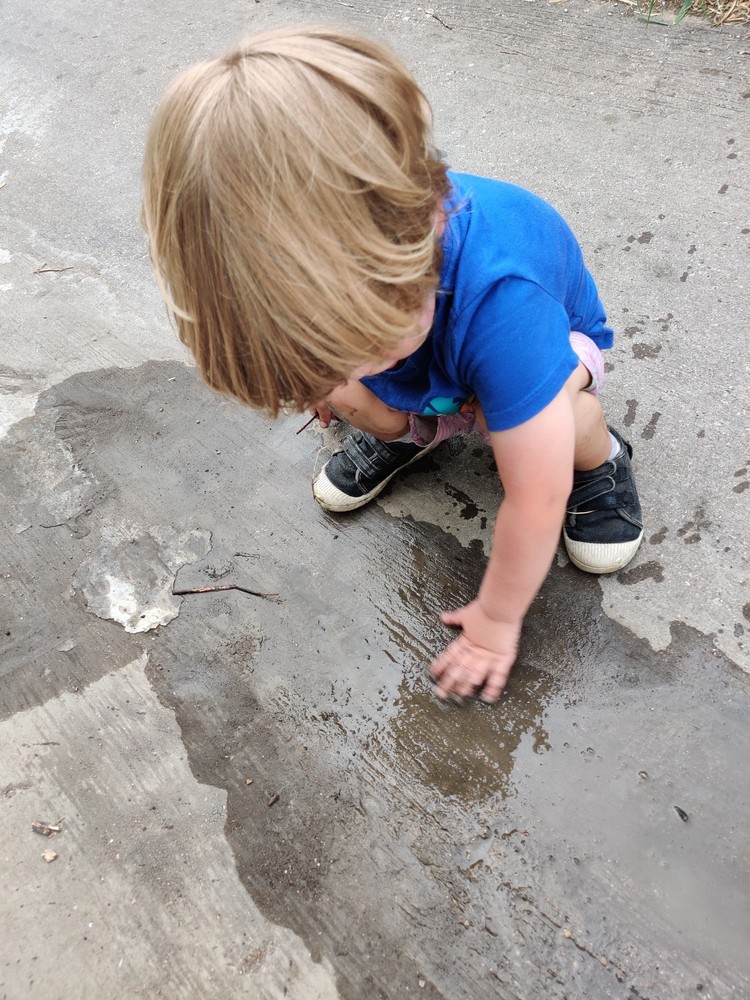
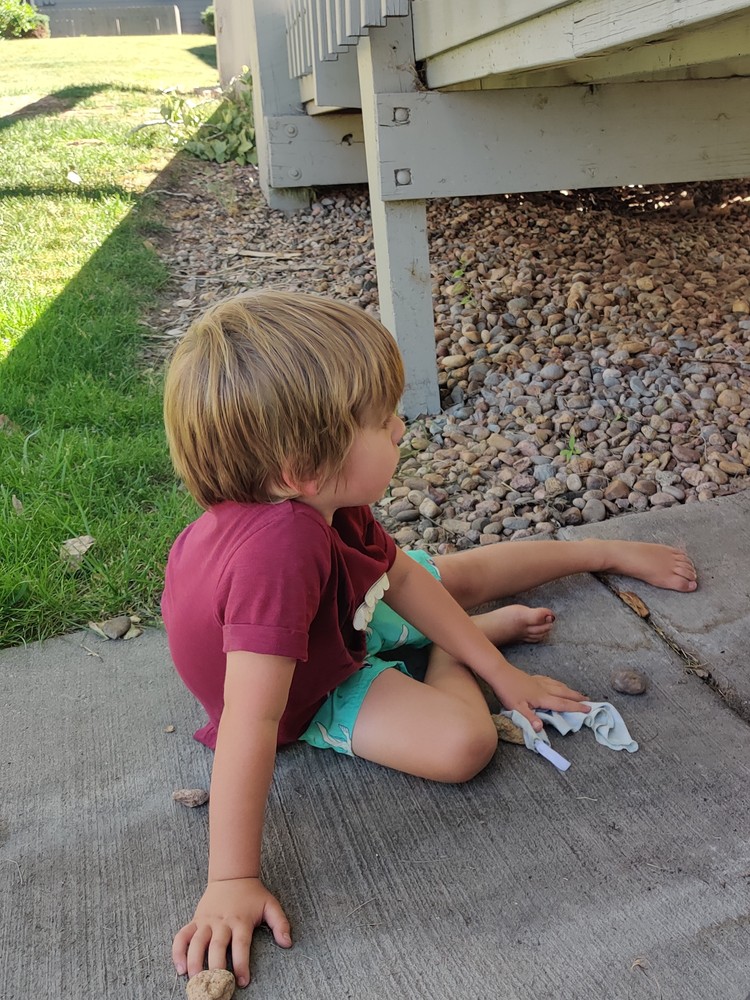
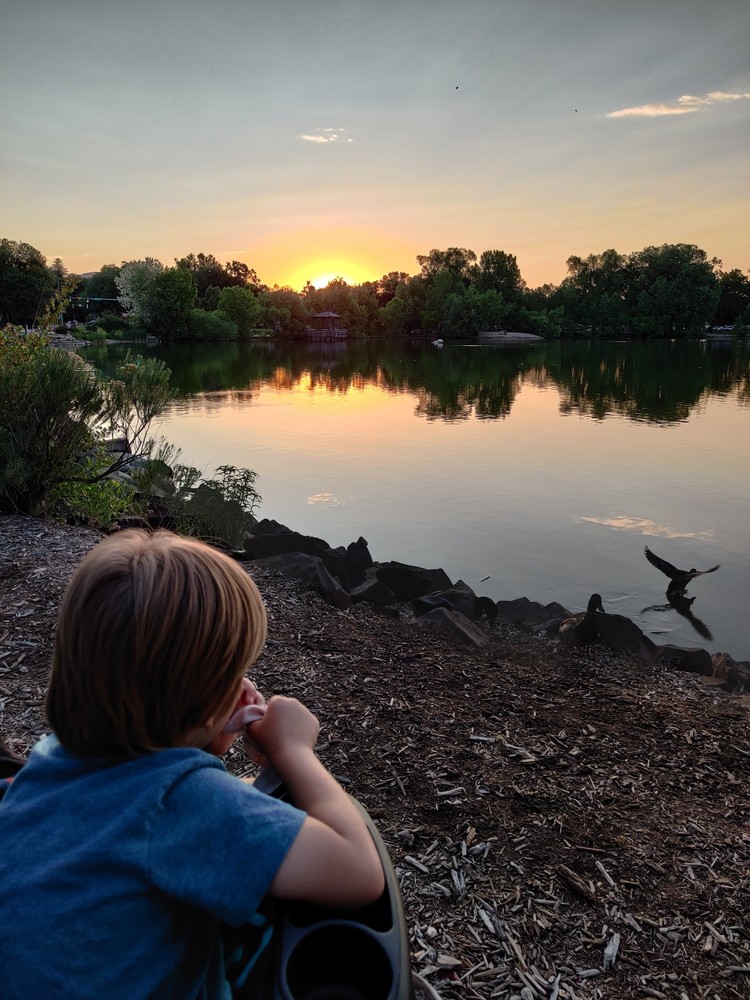
Footnote: Usually when I write an environmental essay I include photographs to support the text. Here, I have featured five images of Damon to give him and his generation a voice. There were five successive heatwaves this summer. There are five photographs of Damon.
Addenda: In my essay, I referred to the extreme wildfire I witnessed on the North Rim of the Grand Canyon in 2025. It left a vast burn scar where rain is not readily absorbed. Therefore, at the start of this summer, the National Park Service cautioned that heavy rain over the area might trigger flash flooding. Following a severe storm passing directly over the burn scar on 29 August, a deadly flash flood took two lives and one person is still missing. Scores of others were rescued from the canyon by helicopter.
On 1 September the Meteorological Office announced this summer was the UK's hottest ever recorded.
On 2 September the United Nations Environment Programme (UNEP) issued a report stating that global warming will now inevitably exceed the 1.5°C Paris Agreement target. The UNEP goes on to warn, “The central message is clear: mitigation and adaptation must advance together. Overshoot is not an argument for resignation, but rather for urgency to action”: https://www.unep.org/resources/limiting-overshoot-navigating-exceedance
 My grandchild, Damon