Two things stand out for me from this past year. One was a nostalgic road trip with my family along US Route 66. The other was the Battle of Barnet. Ironically, both these events forced me face-to-face with our collective future. More about this unsettling fore glimpse in a moment.
 My grandchild, Damon
I think I was born a naturalist. Perhaps we all are, but some of us never lose that sense of being part of nature and an awareness of the interconnectedness of everything. Though initially moved by wonderment, I was soon driven by increasing concern for our shared planet home and have been an environmental activist for the whole of my adult life. That adds up to a little over 65 years of conserving and campaigning. During this time, our native wildlife has been in severe decline. These Isles are now one of the most nature-depleted counties on Earth. Add to this rapidly increasing climate change, and there is good reason to be alarmed for the welfare of our grandchildren's generation.
However, lamenting the dire future that is forecast for the upcoming and future generations does nothing for them or any other living things. Instead, faced with the combined threat of nature loss and inhospitable climate change, we must rapidly mentally metamorphose and radically reframe our mindset. We must challenge limiting beliefs and consciously adopt a new creative outlook to get to grips with these twin crises. Some scientists warn we have as little as 3 years left to hold the relentless rise in global warming to below 1.5 C.
So, can we still keep 1.5 alive or will 2025 prove to be the final moments of its demise? I believe, even at the eleventh hour, it is possible to pull back from the brink. First and foremost, it will necessitate rapidly reducing our carbon emissions, along with other persistent organic pollutants. At the same time, we must hurriedly adapt our towns and cities to include much more blue-green infrastructure (ecologically rich and diverse parks, wetlands etc) to mitigate the life-threatening climate hazards of heatwaves and flooding. Beneficially, any new expansion of both blue and green city environments will automatically enhance urban nature. This year, in two unexpected ways, I got to peer over the brink. The spectacle before me triggered an instant rush of awe and intense anxiety. Yet, coupled to my surging fear was a compelling concern to warn my fellows of the immediacy of the danger to our planet. Yes, of course, many have read or heard the news about global warming and its climate consequences. However, for most people, it is through a media video clip of a remote overseas disaster, far-removed from their own ordinary reality. I want — not wish — to urge everyone to act now to protect their children and grandchildren. Want, rather than wish, expresses a desire for something achievable. It is part of the immediate mental metamorphosis we must enact to counter the current widespread defeatist mindset towards limiting global warming.
Like many of my generation, my eyes were truly opened to our species' potential to destroy Planet Earth by the visionary writings of several dedicated and passionate research scientists of the 1960s and 1970s. Rachel Carson's beautiful book Silent Spring and the compelling Charney Report (Carbon Dioxide and Climate: A Scientific Assessment) were particularly momentous. They provoked me into becoming an environmental activist.
Throughout 2025, along with other volunteers, I planted trees, assisted with river conservation and collected litter. I also joined marches and attended demonstrations for nature and the climate. Yet, most of all, I tried to urge my local authority to think more broadly and radically and then to act with greater urgency in tackling both climate change and nature loss.
Casting my mind back for a moment, I recall on 1 May 2019 the UK House of Commons declared an environment and climate emergency, making it the first national parliament to do so. This was driven by previous months of intense demonstrations, including civil disobedience, enacted by the largely youthful members of Extinction Rebellion. I was one of their elderly activists and took part in occupying the Thames bridges and encircling the pink boat at Oxford Circus. But, although the declaration is an expression of the will of the House of Commons it does not legally compel the government to act. Nevertheless, this parliamentary declaration inspired some ambitious intentions though these, and some specific climate targets, are now increasingly under attack.
Extinction Rebellion's early thrust of disruptive protest momentarily focused parliament and widely informed the public about the existential threat of climate change and nature loss. Perhaps, inevitably, that initial frenzy of activist's alarm-raising has calmed to a resolute slow campaign slog. Now, the more daunting task is to shift the massive weight of government climate inertia. Coupled with which is the need to move the mass of perceived public pessimism. In some ways the present feels reminiscent of that period in the late 1970s when the human impact on our planet's atmosphere was first confirmed by the eminent meteorologist, Jule Charney and his team of eight esteemed climate research scientists. Back then, little concerted political action was taken with regard to greenhouse gas emissions. Indeed, over half a century later, our current carbon emissions are still increasing.
Furthermore, we are once again saddled with the sort of pervasive, perpetual and toxic environmental pollution Rachel Carson so passionately cautioned us about. Instead of the persistent poisonous DDT being added to the environment, it is toxic microplastics and PFAS (per-and poly fluoroalkyl substances) that are now wreaking havoc across our planet. As with DDT, these current forever chemicals magnify in the food chain, concentrating in apical species such as ourselves. To those of us who came of age in the seminal sixties, there is a distinct sense of déjà vu. I still have a copy of the Last Whole Earth Catalogue from the 1970s. I recall our resolve back then to live more sustainably, to conserve water, to use public transport rather than drive, to buy local produce and to adopt other environmentally friendly initiatives. All of this was largely inspired and driven by creative and conscientious citizens, not local authorities or national governments who lagged behind their voters ecological and environmental awareness. They still do at the present time. What the world needs right now is deeply knowledgeable politicians with a profound sense of responsibility and a moral compulsion to act. There's never been a moment in humanity's history more needful of inspiring leadership.
Early in July of this year, I was in Texas during a period of turbulent and terrifying weather. On 4 July, a summer's worth of rain fell in Central Texas in a matter of hours, causing flash flooding and the loss of many lives. The Guadalupe River rose 26 feet (the height of a two-story house) in 45 minutes, killing 137 people, many of whom were children. A part contributor to this deadly deluge was a remnant of Storm Barry that had moved north from Mexico up through Texas, skirting Dallas. I experienced something of the ferocity of this weather system, standing on my daughter's front porch in the southwest corner of Dallas County. The storm's violence was very unsettling, causing local flash flooding, though my family and I were safe. Prior to the Fourth of July deluge, the Texas counties most affected by severe flooding had experienced a prolonged drought since as far back as 2021. The ability of water to infiltrate the land surface is reduced when the ground is exceptionally dry. Extreme heat, resultant from global warming, dried out the land and added extra moisture to the atmosphere, which combined to inflict tragic human consequences.
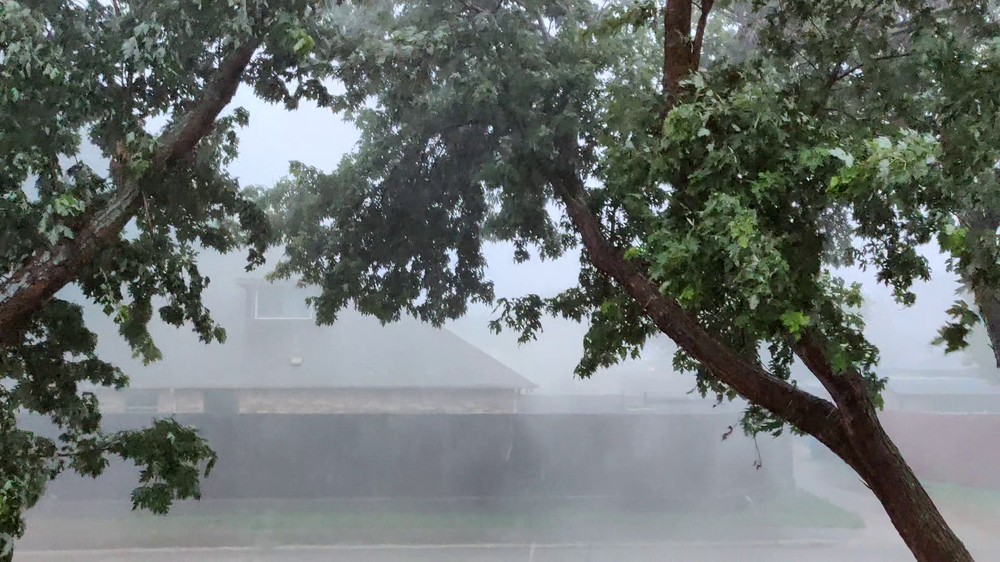
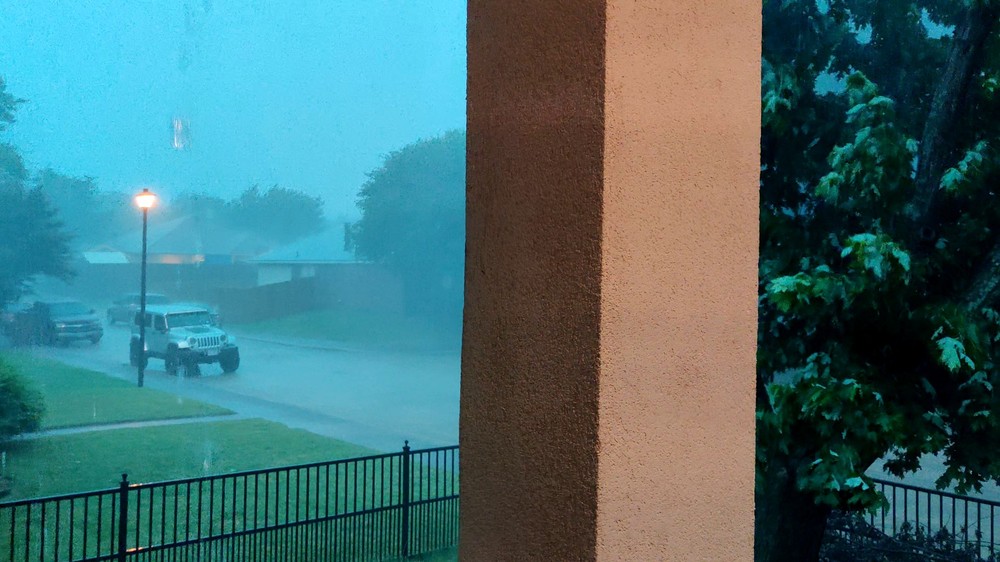 View from my daughter's porch
Alright, I think a respectful respite is in order here. Let's leave climate concerns for a moment and take a brief diversion along US Route 66, nicknamed the "Mother Road". Throughout my children's childhood summers, I took the two of them on many camping road trips. We travelled in a second-hand Ford Fiesta with a small tent and sleeping bags onboard. I spent June, July and August outdoors with my kids, financed by working as a part-time teacher throughout the other seasons. During those summers, we hiked along coastal paths, climbed mountains and camped in forest and field in our tiny tent. Those thrifty cultural adventures around the British Isles and across Europe showed me that the seemingly impossible can sometimes become realizable through mental metamorphosis: "Think outside, no box required". Then, this past July, the three of us were together again for the mother of all road trips. Only, the roles were reversed, with my son, Sean, planning and leading the whole adventure. But special to this occasion, my daughter Emily's child, Damon, was onboard, expanding our original trio to a quartet. How lovely to pass on our family's tradition of outdoor summer adventures to the youngest member.
It was Steinbeck, in Grapes of Wrath, who christened our intended route the Mother Road. A reminder of the 1930s Dust Bowl disaster, caused by a combination of extreme drought and the impact of unsustainable human land use. So, before we set out, the ghost of an historic climate-related environmental disaster already haunted our chosen highway west. However, that slipped to the back of my mind as we sought our kicks on Route 66. We all needed a fun break, none of us having had a vacation in quite a few years of caring for our neurodiverse Damon. Primarily, we were intending to pack in a lot of sightseeing interspersed with experiencing the great outdoors of five contrasting states. Sean's plan was to travel the mid-length of the Mother Road spanning from Texas to New Mexico into Arizona. We would then detour north in a large arc from Flagstaff, a high-altitude mountain town famous for being the world's first International Dark Sky City and home to the renowned Lowell Observatory, before eventually turning south to re-join Route 66 a little east of the famous highway's midpoint in New Mexico. This semi-circular stray north was to satisfy our collective craving to see the Grand Canyon and the Rocky Mountains. Our route between the "mountain lying down" (the native Paiute term for the Canyon) and the Rockies led us through the magnificent Monument Valley straddling the Utah-Arizona state line. Leaving behind the Valley's striking desert we entered the mysterious Mesa Verde National Park, before our final stretch toward the high-altitude San Juan National Forest and the mountains of Colorado. In travelling west, we crossed the great plains from Texas into New Mexico. The landscape blew my mind as did the cultural heritage dotted along the Mother Road's now fragmented length. With its 100th anniversary in 2026, there is a stepping-up of the campaign to win federal recognition for Route 66 as a National Historic Trail. We dined at some celebrated and often quirky restaurants and a few former trading posts. Overnight we rested at several famous period court motels. Our sightseeing took in the world's largest Bowie knife, the celebrated Cadillac Ranch, the amazing cliff dwellings and palace of the ancestral Pueblo people, the spectacular stretch of desert road where, in the movie Forest Gump, Tom Hanks finally stops running and the Durango & Silverton Narrow Gauge Railroad. Of course, there were more but this selection shows we embraced both the silly and the serious.
The sun had set before we reached Flagstaff. Our long half-circle route north saw us enter the immense and dense Kaibab Forest late into the night. A slack speed and considerate caution was called for as deer repeatedly crossed through the beam of our headlights. It was carbon black at 3 am, concealing the Canyon from our view, when we reached our lodge on the South Rim. This early hours arrival and nocturnal interlude only served to heighten our anticipation of what vast vista lay ahead for us in the morning light. We were to pause two days here, enraptured by the monumental landscape while rightly feeling miniscule perched on the rim of one of Nature's vast wonders. There was a moment when we ventured down a canyon trail with Damon. I captured his adventurous image in the same way I had photographically recorded his mother and uncle's childhood outdoor explorations. All who have seen this canyon picture express wide-eyed delight at uncle and nephew hand-in-hand descending the Bright Angel Trail. All are touched by the tender and protective connection between adult and infant as they enter this beautiful but vast chasm. Almost no one notices the smoke, partially merged with the clouds on the horizon. True, it is a beautiful and touching scene but it is a deeply sad one too. It depicts my adult child leading my grandchild into his immediate fun-filled future down the trail. But, on the horizon hangs the horror of their likely long-term future — a menacing manifestation of climate change.
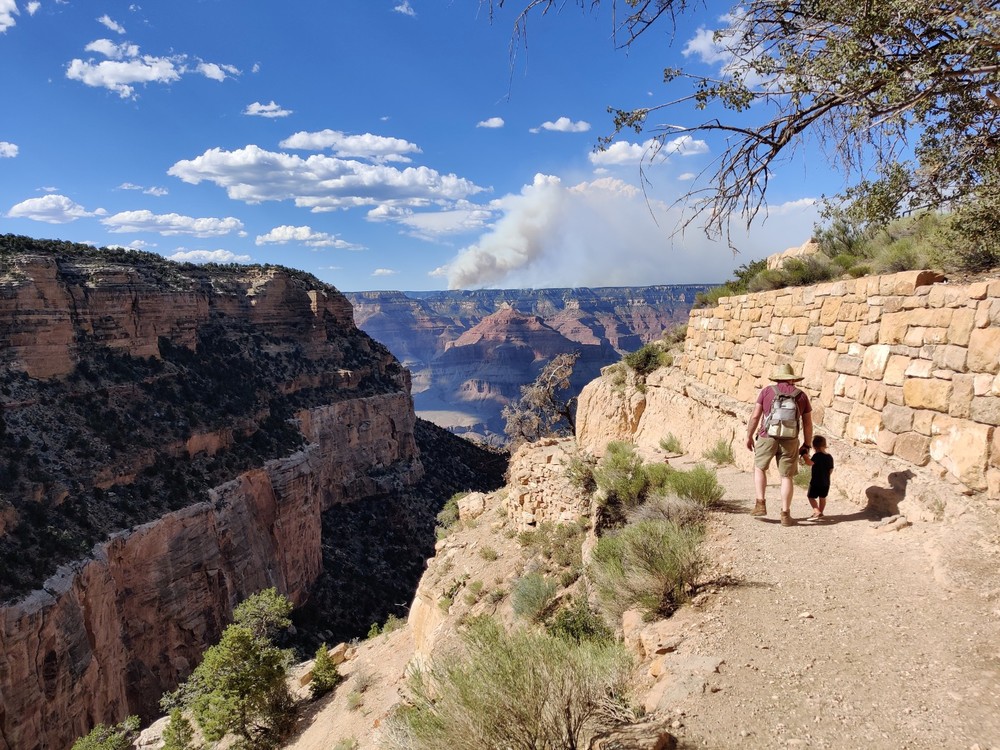 Bright Angel Trail
The very next day, into that joint future, the wildfire flared into a mega blaze so fierce that it generated its own weather system. I captured it at sunset spawning a sinister pyrocumulus cloud. Later, the fire went on to grow a terrifying pyrocumulonimbus cloud issuing gusting winds and dry lightning making the inferno spread unpredictably. Once this happened the fire raged out of control and was too dangerous to tackle at all. Ultimately, the biggest US wildfire of 2025 took three months to finally be put out. We should remember the Grand Canyon with its surrounding forever-forest was a primary focus of President Roosevelt's conservation concerns at the start of the 20th century. What a contrast with the current foolish incumbent in the White House, yet we must not despair.
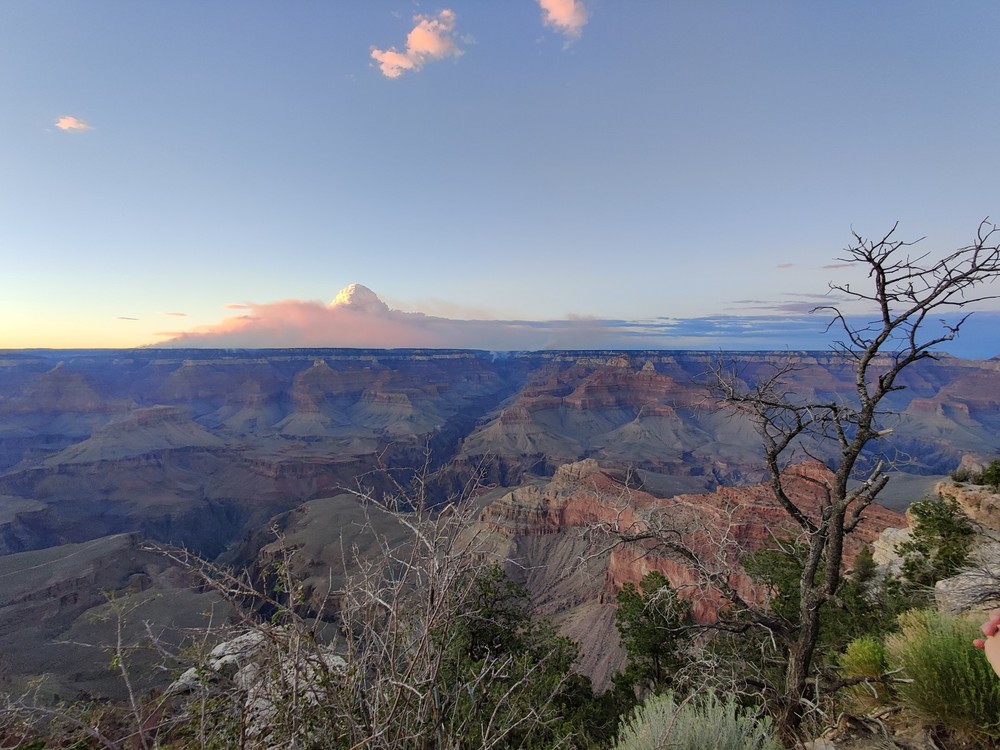
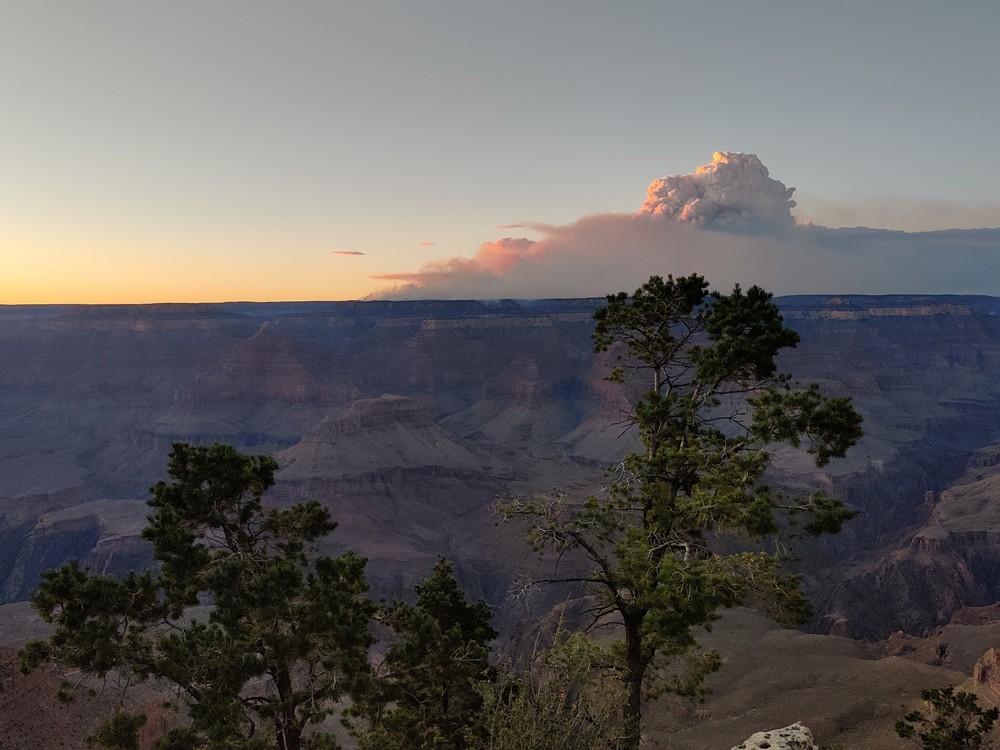 The Grand Canyon
As in Dallas, earlier in the month, I found myself once again standing on the edge of a climate disaster. The extensive Kaibab National Forest covers both the North and South Rims of the Grand Canyon. During our visit, the canyon itself was in effect the firebreak between our family's wooden lodge accommodation and the inferno across the divide. Much later, I was to discover the deadly deluge in Texas that took so many lives and this monster wildfire that obliterated close to 230 square miles of nature had both started on the Fourth of July. A strange and startling symmetry. I have seen far too many climate disasters broadcast on the news while living a safe mundane existence in the London suburbs, but this was the first time in my life I have seen not one but two climate disasters on the ground. I witnessed the power of both and saw that in the face of such previously unimaginable events there is nothing our species can do but retreat. Yet, retreat to where, because sooner or later the unimaginable will happen here, and indeed everywhere. It's not about panic and despair, neither is it a head in the sand moment. Now is a time to act boldly with courage and creativity. We must adopt the mantra, "Think outside, no box required".
On my return to the London Borough of Barnet I walked under colourful high street banners commemorating the Battle of Barnet in 1471. I prize recalling the past, whether it be that of the American Mother Road or the English Wars of the Roses. However, we desperately need a mental metamorphosis locally, too! There is a contemporary Battle of Barnet that urgently needs to be fought as part of the global climate emergency. It is an immediate battle and it is here and right now. I was fighting it before my summer sojourn with my family and again immediately on my homecoming. The urban streams and green spaces of Barnet and the grandeur of the Grand Canyon are at polar ends of an environmental spectrum. Nevertheless, I would argue they merit equally serious consideration in a global climate emergency.
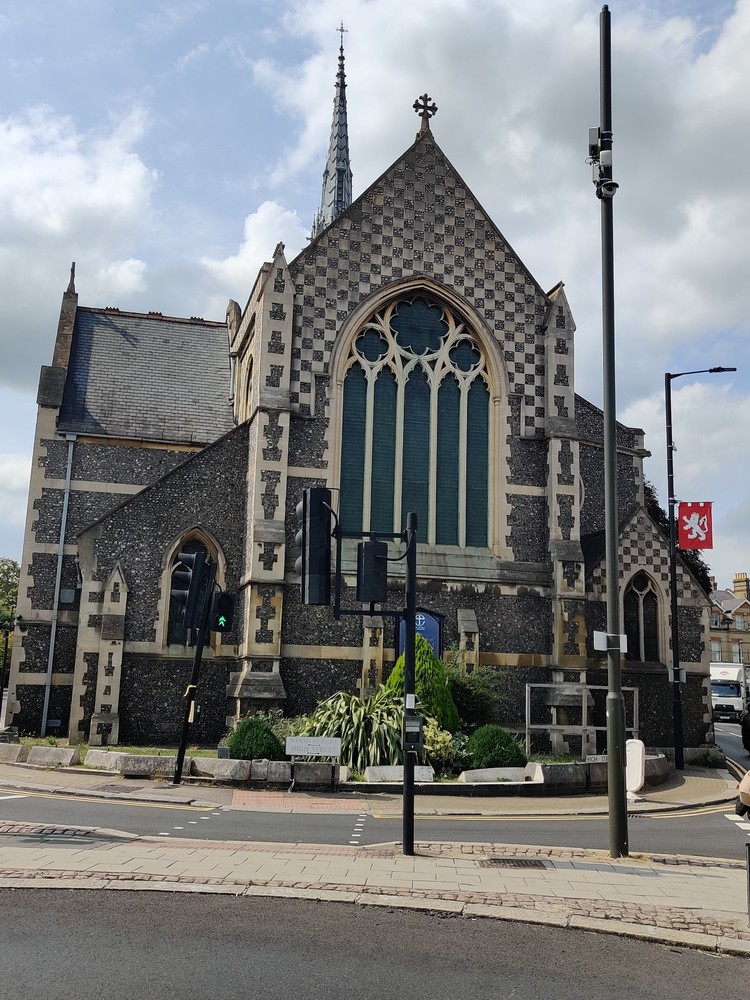 Battle banners in Barnet High Street
How does Barnet stack up in importance compared to the Grand Canyon? Well, in the face of a possible never-before-seen climate event, we are talking about a dense population packed together, even stacked together, in an increasingly high-rise urban environment sooner or later being subjected to exceptionally intense heat waves and flooding. Alongside which is the ongoing destruction of nature across the British Isles. The summer of 2025, with its four heatwaves, has been the warmest on record for the UK. In September of this year, the country's Wildlife Trusts reported the summer's extreme heat and drought had impacted and stressed wildlife, causing dehydration and heat exhaustion in animals in the same way it does in us. The heat and drought damaged plants, which are the foundation of most food chains. Less plant food for insects means in turn a reduced insect diet for bats and birds. Put plainly, extreme heat results in a famine for wildlife. The prolonged heat also caused habitat damage and disturbed the breeding season of some species. Water levels in streams and rivers dropped affecting amphibians, dragonflies and swifts. Peat bogs and heathland dried out. In June 2023, I witnessed similar stress on London wildlife first-hand. Prior to this year, that June was the hottest on record in England since 1846. Throughout that sizzling month, I provided a daily dish of water for garden creatures and constantly fed a family of robins on mealworms, even after the young were fledged. When I was slightly slack in putting out the mealworms, one of the adults would solicit more, even to the extent of flying in and out of my kitchen doorway.
I engaged early this year in the Battle of Barnet. I fired off 2025 with a stint of January litter clearance along the Dollis Brook at Totteridge. I added four large bags of collected refuse to the other volunteers' mountainous haul of discarded plastic bags, cans, bottles, food packaging and more. In March, I joined environmental enthusiasts planting trees to create a tiny forest alongside the Mutton Brook in Hampstead Garden Suburb. In the same month, I individually collected a load of litter from the Silk Stream and its park surrounds in Burnt Oak. This included dragging an electric bike from the watercourse. I report all my findings from these environmental excursions to the local authority so they are better informed about their borough's pollution situation and other ecological problems. On 11 March 2025, having spent several days picking up and bagging rubbish, I reported on the "awful state — litter wise" of the Silk Stream wetland area, which serves as a flood alleviation zone. In my email to the council I attached photographs, vividly illustrating this shocking environmental mess. Aside from making the appearance of Barnet's green/blue spaces unappealing, all this litter has very serious, but largely unrecognised, consequences. Without doubt, the primary source of this poisonous pollution is a thoughtless section of the public who discard their litter, anywhere in their neighbourhood, without a moment's thought or hesitation. Unbelievably, many of these ordinary everyday discarded items contain the toxic forever chemicals PFAS. Unknown to many, and in my view beyond credulity, these toxic chemicals are incorporated into food packaging as a grease-proofing agent. Paradoxically, soda cans are also lined with PFAS to avoid metal leaching into the drink content. This creates a crazy trade-off where a potential metal contamination risk is replaced by a known toxic chemical risk. Let us be clear, the human health risks here are extremely serious. They include decreased fertility, developmental effects or delays in young children, increased risk of prostate, kidney and testicular cancers, reduced ability of the body's immune system to fight infections, interference with the body's natural hormones and raised cholesterol levels and/or risk of obesity.
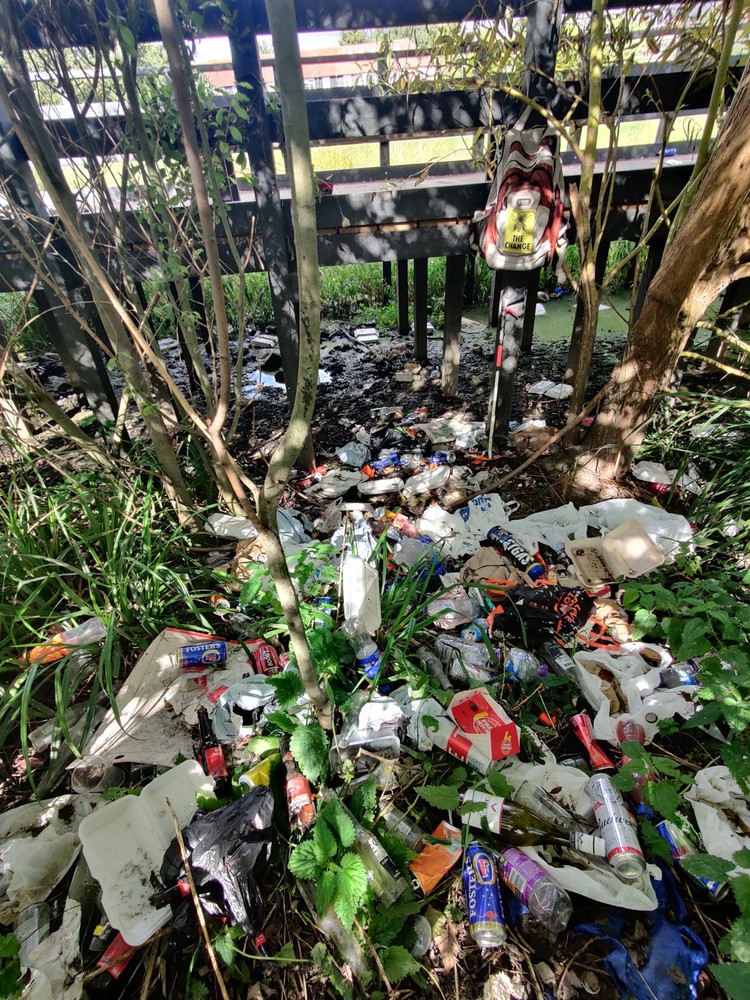
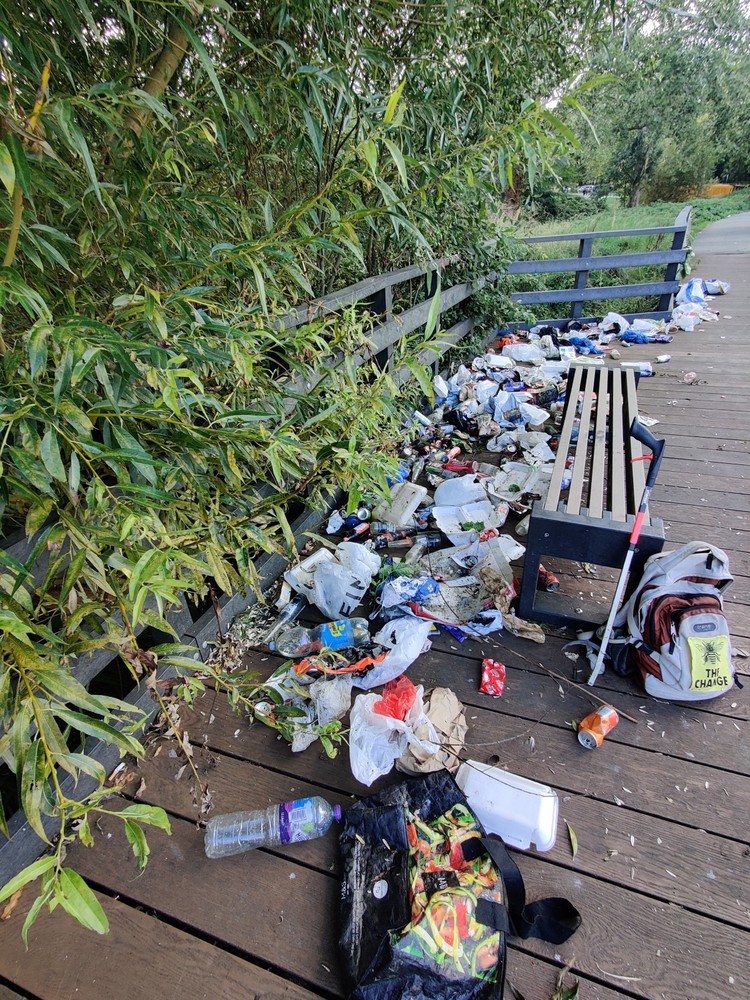 Wetland despoiled with litter
The wider environmental dispersal of these poisons becomes particularly hazardous when the litter is discarded in parks and open spaces with watercourses. The litter, especially plastic bags, easily gets blown into streams. On a stroll this summer, I observed plastic bags caught on waterside vegetation every couple of metres along the length of the stream from the north end of Silkstream Park to the south end of Montrose Playing Fields. Yes, in-stream traps for catching litter do exist. There is one in the Silk Stream at Hendon. Though helpful, these traps fail to catch everything. They are easily bypassed during flooding, carrying toxic pollutants down river to the oceans. They need to be regularly and efficiently cleaned, which is not always the case at Hendon, as I have observed and reported to the authorities. Plastics and other litter, often partially disintegrated, enters the Welsh Harp (Brent Reservoir) at Hendon. Though microplastics in the reservoir's silt are publicly admitted, this poisonous pollution problem is not being adequately addressed by the Council. In fact, the Council is actually exacerbating this disastrous chemical contamination of Barnet's environment by its style of management practiced within our local blue/green infrastructure. Cutting vegetation before litter removal results in all types of packaging, cans, glass bottles and plastic bags being fragmented. Multiple plastic bags entangled in waterside vegetation, though unsightly, are relatively easy to grab with a long handle litter picker. Shredded plastic of leaf-size or smaller is another matter. It is readily blown into a watercourse and then rapidly carried downstream by the current. I made video recordings of this happening in Silkstream Park. Yes, visual evidence that Barnet poisons the wider world with microplastics and the forever chemicals PFAS. Assuming there is a volunteer immediately on the spot, with equipment to grab litter, it is a near impossible task capturing a significant amount of either the wind-blown or current-propelled plastic fragments. I know, I have attempted the tasks in the wake of the Council's misguided mowing practices. Hence one of my summer-long skirmishes with the authorities, to protect our planet home, in the Battle of Barnet 2025.
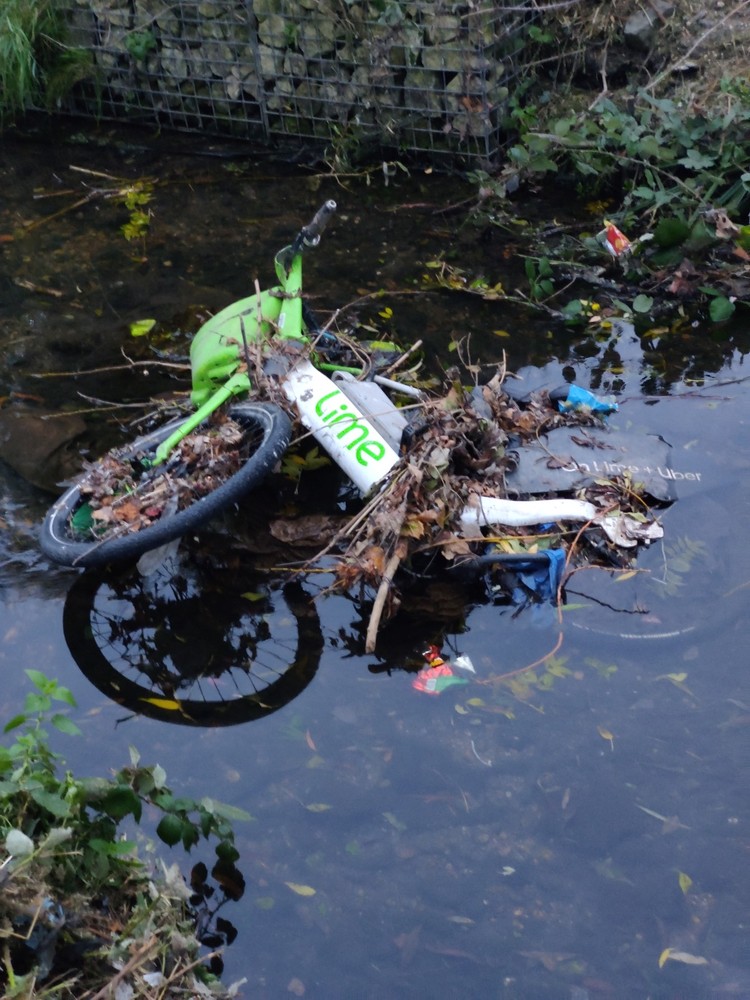 Floating, shredded fragments of plastic
I first encountered this foolish environmental management technique in my role as a local volunteer on 8 June this year. It being World Ocean Day, I determined to collect plastic litter from the Silk Stream to prevent it from ultimately being washed into the Thames and then swept out to the sea. It was a mild day, so I sauntered north along the stream hoicking out carrier bags and other plant-entangled plastic on my way. I was soon approaching the most ecologically valuable and enlightened aspect of the park, which serves as a flood mitigation measure. Immediately, after crossing its wetland elevated walkway, I discovered that a significant stretch of bankside bramble had been mown flat. This seemed to me a majorly misguided management method for early summer, given that bramble is very beneficial to our depleted wildlife. Bramble provides an essential, year-round resource for food and shelter. It supports over 150 insect species, offers nectar for pollinators, berries for birds and mammals, and thorny protection for nesting creatures. Despite its invasive potential, it is vital for biodiversity. Flattening it in early June denied a plethora of local pollinators its nectar laden flowers and a bunch of local birds and mammals its potential autumn fruit.
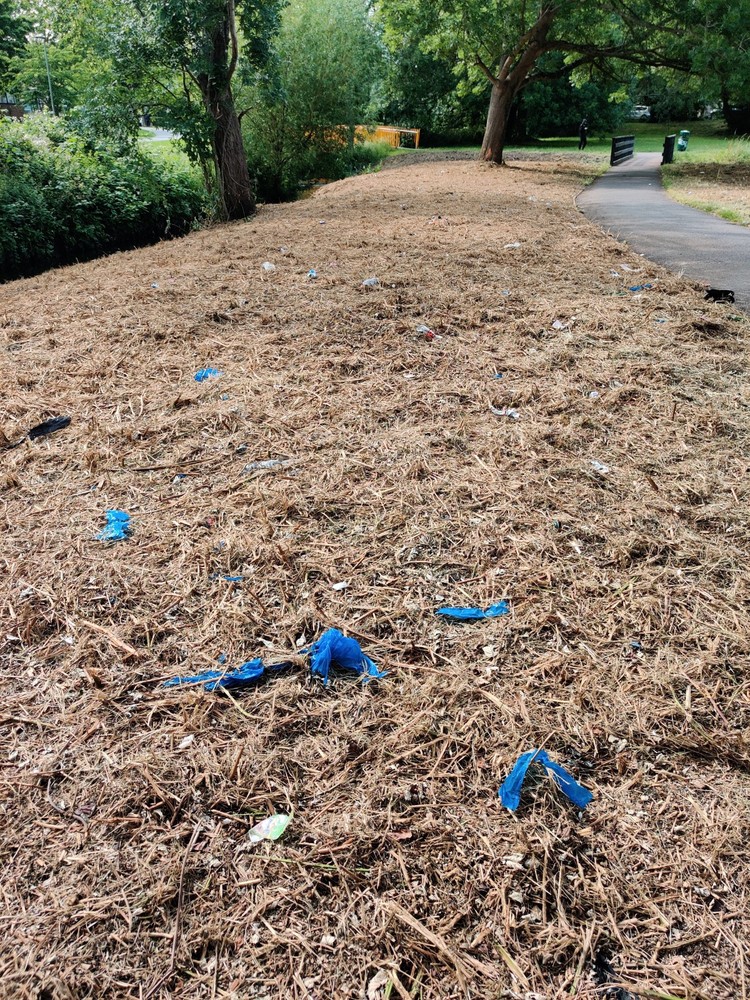 Bankside bramble mown flat
Closer examination of this stretch of mechanically chewed-up bramble was to reveal another level of ecological maladministration. Along with the spiked bramble stems, litter comprising of plastic bags, soda cans, glass beer bottles as well as polystyrene and cardboard food packaging had all been mechanically sliced creating a shredded, inextricable mess of mixed organic and human-made matter. I had a despondent go at physically separating the manufactured fragments from the barbed biotic ones. As anticipated, it proved a futile exercise. How demoralising and demotivating for any volunteer attempting to fight for the borough's declared green agenda. The Silk Stream is not the Colorado River racing through the Grand Canyon, but after 65 years of activism I confess a river of despair raced through a chasm of frustration in my own soul. I duly informed the council of this environmental pollution and habitat destruction. Their response was to explain that the bramble flattening was a public safety measure to open a sightline to a secluded part of the wetland pathway. They promised to clear up the plastic, metal and glass fragments. I monitored the area for the rest of the summer. The pledged clear-up did not take place, and by autumn the bramble had resprouted, beginning the process of growing over the toxic litter and burying it. The council, through maladministration, is shockingly treating Silkstream Park as a landfill.
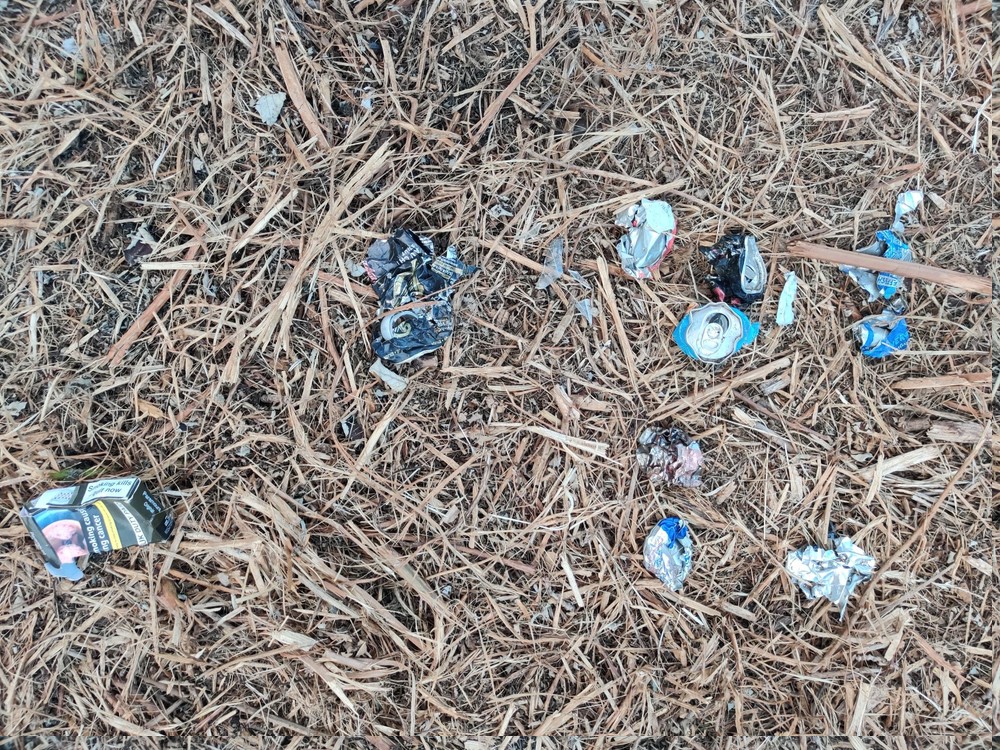 Mechanically sliced litter
Back in north London following my stateside road trip, I reengaged with the Battle of Barnet. To my astonishment, the Silkstream Park wetland had been brutally cut back further, reducing its peripheral trees to stumps. This was to give the police a sightline to the north end of the wetland walkway from their vehicles on the road. This echoed the earlier slashing of the bramble in June, which was also done to create a sightline. The combined effect of these drastic actions has decimated the wetland habitat on both the west and east side.
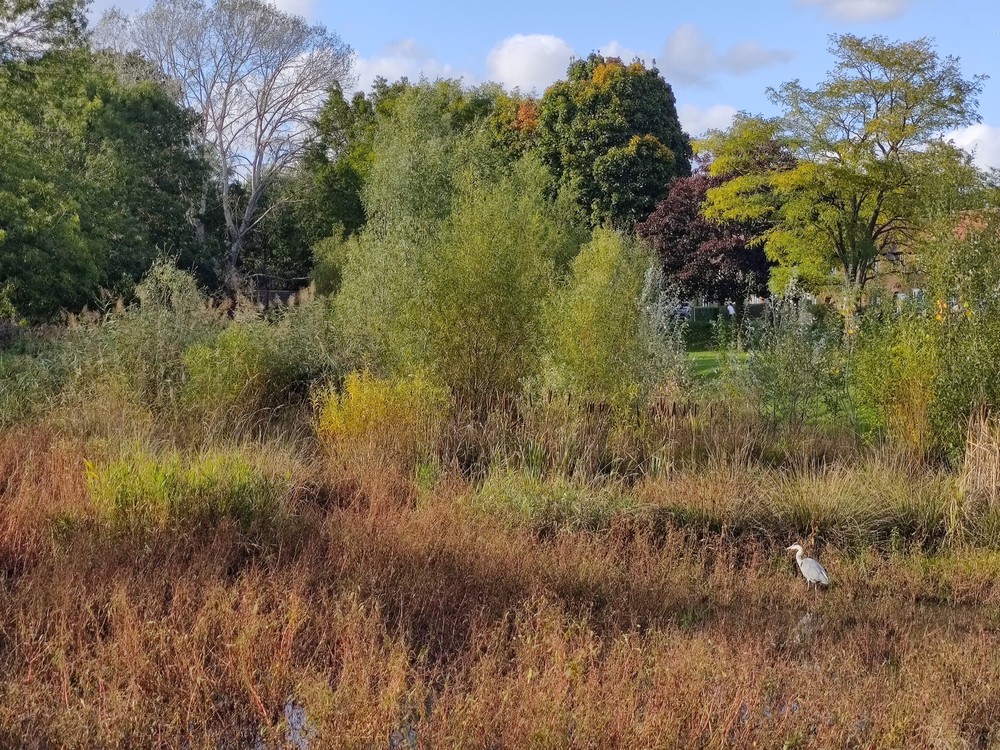
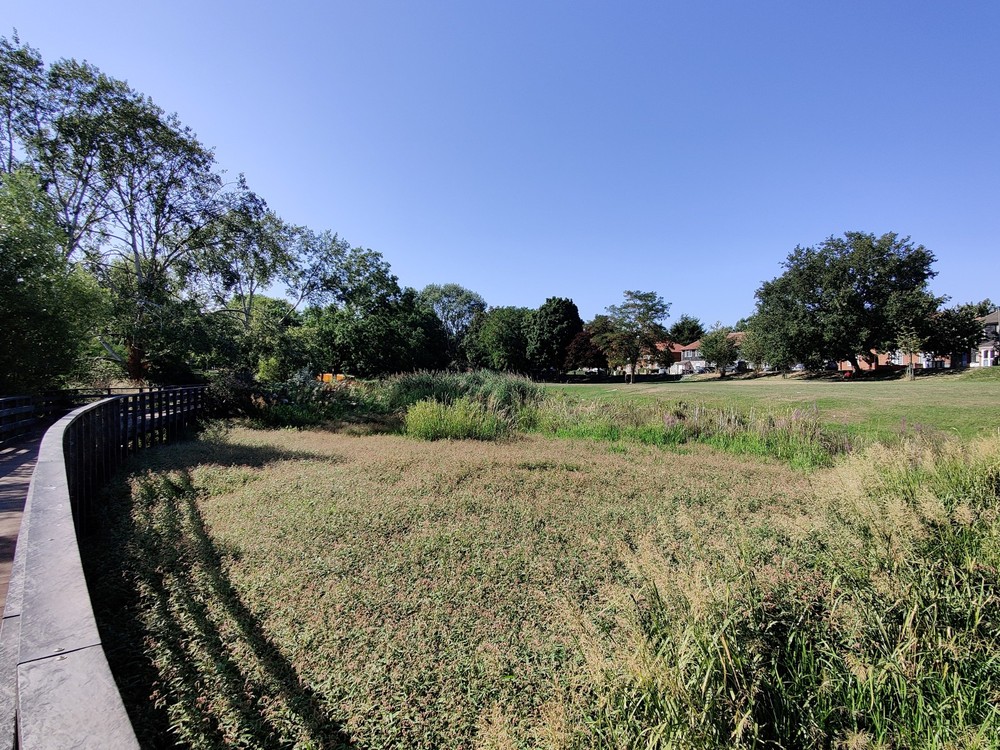 Wetland habitat before and after destruction
The next battlefield was Windsor Open Space, fringing the Dollis Brook. On 16 August, I arrived there to join other volunteers to remove litter, only to be faced with another situation where the council contractors had preceded us with their misguided mowing strategy. This time it was grass rather than barbed woody bramble that had been cut. As a result, the mixed in litter was more finely fragmented and impossible to grab with a long handle picker. To be truthful, I had no stomach for the fight. I could not deal with the mind-numbing tedium of a fingertip sort through the cuttings of an entire mown field. Thoroughly disheartened, I discreetly left the hopeless task. I reported the stupid waste of the volunteers' time along with the shameful, council-aided dispersal of pollutants into the land and water of the Dollis Valley Greenwalk.
In between these battleground engagements, I went to meetings and marches and took part in a sponsored walk or two. Yet, I always came back to the ongoing Battle of Barnet. Over the summer, dating back to mid-June, I have reported on the poor state of the wetland zone in Silkstream Park. It has been a litter-strewn eyesore all summer long. I made personal efforts to remove some of the widespread rubbish. These intermittent spring to autumn skirmishes were to reach a climax for this year on 17 October. Late that afternoon, I chose to walk through the Park to the shops. My intention had been to take the most direct route through this green space, bypassing the elevated walkway over the wetland zone to save time. On entering the north end of the park the noise of heavy machinery, chewing up vegetation, caused me to change my mind and investigate what was going on in one of our few valuable greenspaces in the southern half of the borough. How do I politely begin my account of this major engagement in the Battle of Barnet? Perhaps it's now time to call for reinforcements and to urge all Barnet residents to join the battle for Barnet's future.
I want this next passage to serve as a Battle of Barnet rallying cry, calling on all who live in Barnet, to hold our local and national politicians to account.
I am not a professional ecologist but my instincts tell me something is seriously wrong with the environmental management of Silkstream Park and indeed the whole of Barnet's blue/green infrastructure. The wetland zone was created, at enormous expense, to meet the twin crises of climate change and biodiversity loss. The current aggressive cutting-down of this potentially rich wildlife habitat dramatically undermines the urgently needed local effort to help restore our appalling national destruction of wildlife. This jewel in the crown of Silkstream Park is becoming little more than a litter-clogged overspill for the stream. Under these circumstances the walkway plaque banging on about biodiversity becomes somewhat meaningless.
Just two weeks prior to my walk through the Park on 17 October, I had enjoyed watching a late red damselfly perched on the walkway handrail basking in the autumn sunshine. After it flew off, I noticed a wren bustling about in the bramble beneath the handrail. Along with the heron I had glimpsed earlier wading in the stream, they collectively hinted at the wildlife potential of this human-conceived ecological treasure. A rare example of adding to Barnet's blue/green infrastructure as urged by climate-focused scientific research.
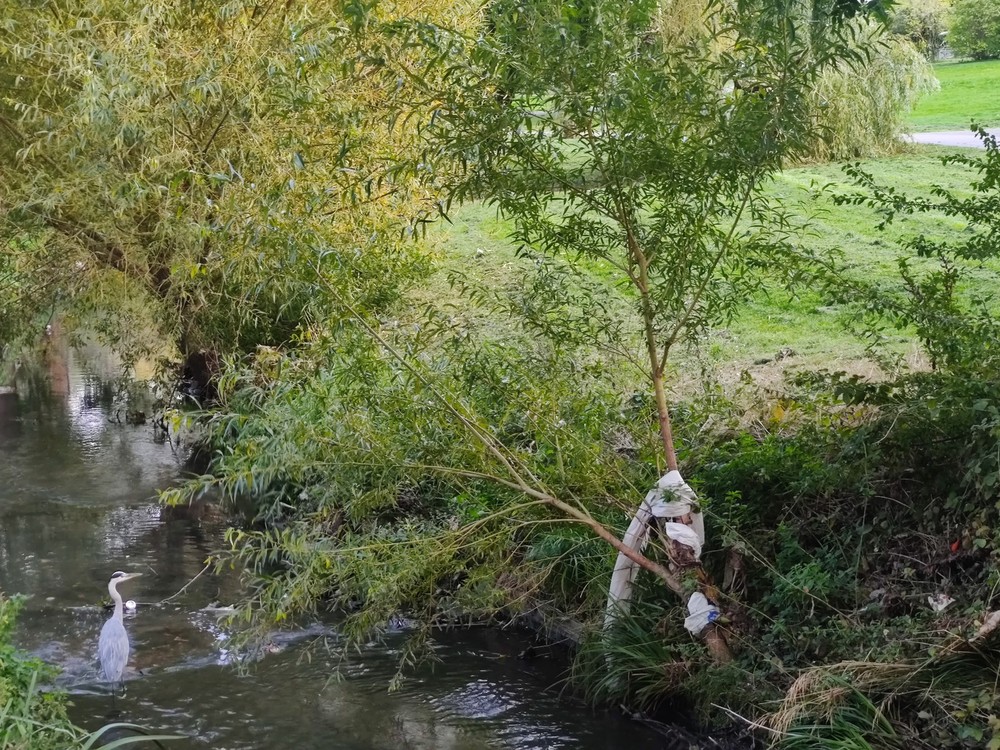 Heron screened by intact habitat vegetation
Therefore, Friday, 17 October was to come as a massive shock to me. That afternoon, my impulse had been to skip the wetland walkway given its unappealing litter-strewn messy state. But, the cracking sounds of heavy machinery chewing up vegetation concerned me. Of course, many types of habitat need sensitively managed intervention, only this sounded brutal in its execution. Once on the walkway, I watched in disbelief as the stream bankside vegetation was stripped to nothing other than mature trees. What is more, the enormous amount of litter embedded in this vegetation was smashed and shredded into countless metal, glass and plastic fragments. This was happening on the west side of the walkway, compounding the earlier crude cropping of the vegetation in the wetland zone.
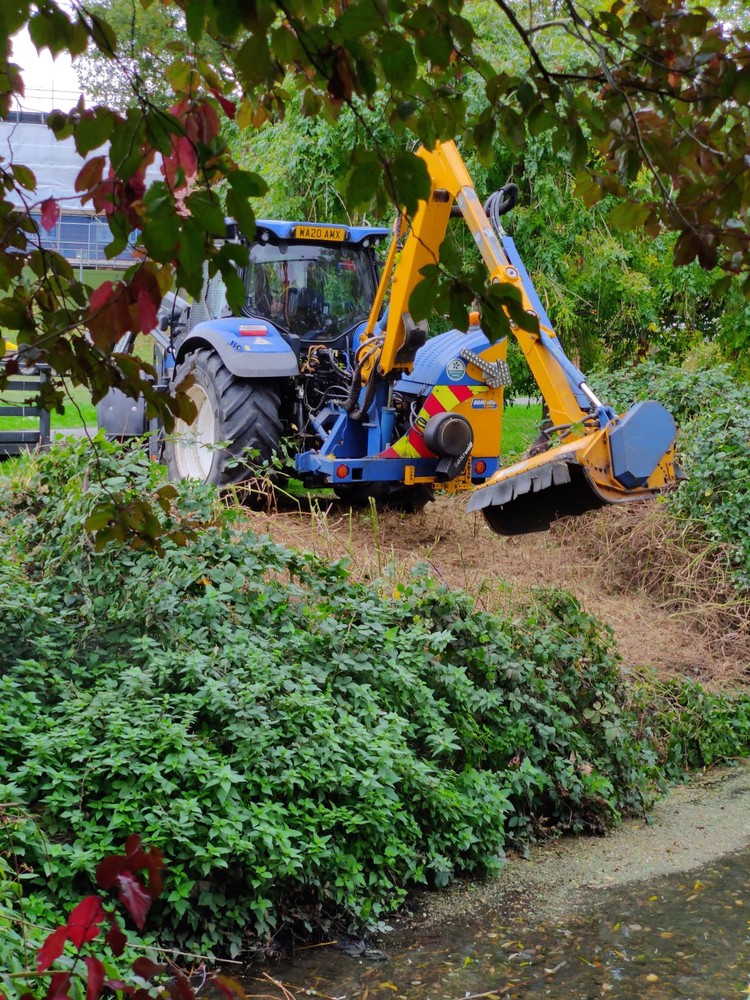
Totally dejected, I headed south to exit the park for the shops. It was only then that I experienced the full horror of the day's urban ecological vandalism. Both banks of the Silk Stream had been stripped of their vegetation from one end of the park to the other. A trail of shredded litter, inextricably mixed with the plant cuttings, covered the entirety of the east and west banks of the stream. At a guess, 70% or more of Silkstream Park is mown grass — great for people but near useless for flora and fauna. The shrub and herbaceous layer beneath the trees along the stream's banks were the only meaningful habitat for wildlife in the park, that and the wetland zone. The former has essentially been removed and the latter severely cropped to waist height. To finish things off, the length of the stream has become a landfill for innumerable glass, plastic and metal fragments. It doesn't get worse than this. In what few green spaces Barnet has left, in its southern half, it is destroying the best habitats for feeding and sheltering wildlife of all kinds, from the tiniest invertebrates to the apical vertebrates. Simultaneously, Barnet is slicing up litter, of all types, and in so doing dispersing microplastic and poisonous PFAS in both land burial and water contamination.
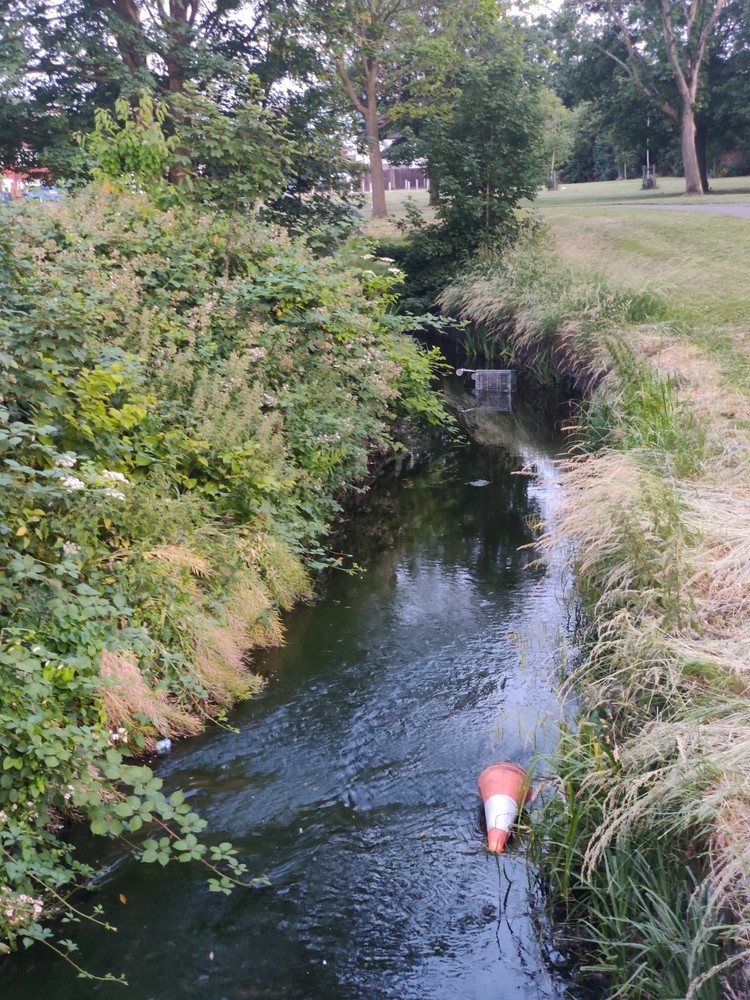
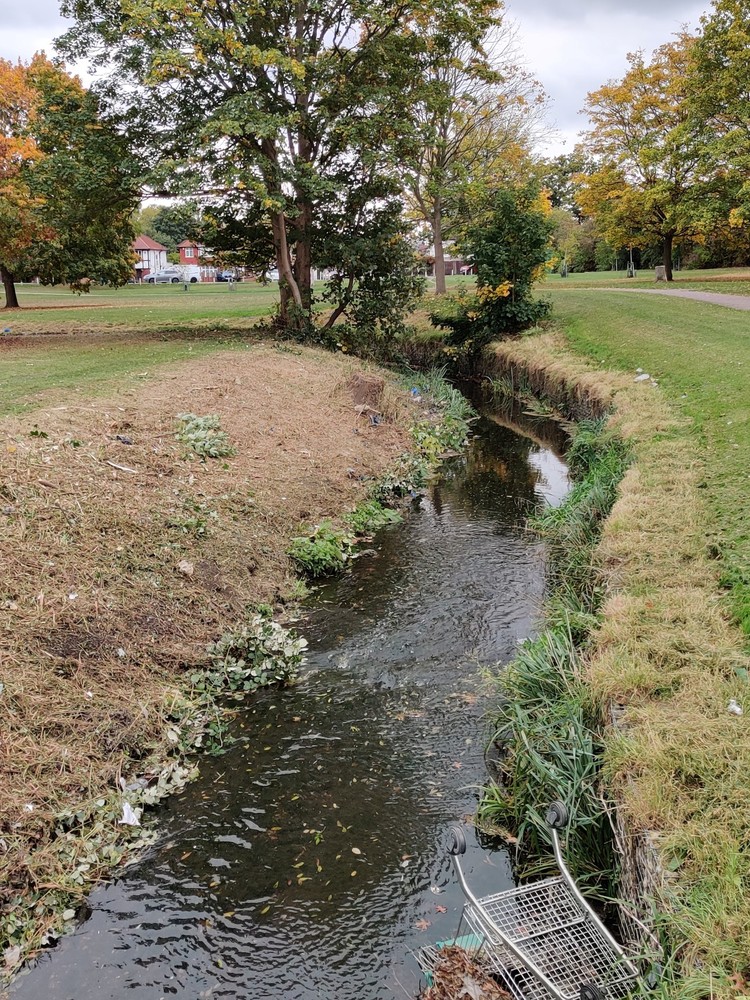 Bankside habitat before and after destruction
As I said, I am not a professional ecologist. However, I do understand the notion of succession and climax communities. I therefore appreciate the need for managing certain types of habitats. Instinct tells me that stripping both banks of a stream of all vegetation — including brambles — is not smart management from a biodiversity perspective. The wren I watched needs winter shelter and a food supply. The heron needs a screen of vegetation to fish undisturbed. These waders are not comfortable with humans visible above them on the bankside. The bank-top brambles provided shelter and food for invertebrates, birds and mammals. Stripping the length of the stream on both sides can only further undermine biodiversity in Barnet. Surely managing the brambles in autumn should be done on a rotational basis. Barnet's streamside bramble (Rubus fruticosus) is a member of the rose family (Rosacea). Barnet's brutal full-scale attack on this vital plant, and consequently on all its dependent creatures, amounts to a modern day War of the Roses.
In addition to dramatically undermining biodiversity in Barnet, the crude mechanical slashing of the understory to ground level has shredded vast amounts of the park's accumulated litter. This has generated two types of pollution. The splintered cans, glass and cartons will be grown over, the full length of the park, effectively turning it into a landfill. It will also include much shredded plastic. However, a significant amount of the now leaf-size plastic will be rapidly blown into the stream and ultimately end up in the ocean as microplastic.
We can conclude from all this that Barnet's park management methods are undermining wildlife from hymenopterans to herons and simultaneously causing both land and water pollution. Ergo, we are on the wrong side of madness.
My current Battle of Barnet weirdly echoes my environmental activism of the 1970s. It was a decade of protest, amplified by a harmony of arts and science. Led by Pete Seeger and Joan Baez, folk activists who championed environmentalism and social justice through songs like "My Dirty Stream", "Where Have All the Flowers Gone?" and "I Am the Tree You Plant". US Route 66 was at the peak of its popularity back then. In the wake of this counter culture upheaval, I as a young science teacher, put a proposal to Barnet Council envisioning the length of Dollis Brook as the first leg of a wildlife corridor stretching to central London. I argued against the manicured management of its lawn-like banks in favour of flower meadows. To promote biodiversity I called for a suspension of mowing during the flowering season and the cessation of spraying with selective weedkillers. It was an ambitious proposal, opposing the entrenched tidy-park mentality of the time. In those days, such was our urban disconnection with nature, humble grass was often signalled as out of bounds by a forest of "KEEP OFF THE GRASS" signs. How depressing, Barnet's disregard for wildlife seemingly hasn't moved on after half a century of increasing environmental awareness.
In addressing the necessity of keeping global warming to below 1.5 C, I have elaborated about plants and animals as well as manufactured forever poisons rather than exclusively focus on our inordinate use of fossil fuels. I've done so partly because these non-fuel issues are all interconnected with keeping our planet home hospitable to us and other species. However, it is also because the scientifically-best solution to global warming, in the short term, is to build in urban resilience to climate change while we try to slow down and halt global warming by eliminating fossil fuel use. Science tells us the very best way to defend our cities against extreme weather effects is not merely by the conservation of pollution-free existing urban blue/green infrastructure but by substantially expanding our community greenspaces. Stacking people in high rise buildings in the face of global warming without the protections of nature has precedents. The ancestral Pueblo people disappeared from their multi-story, terraced stone dwellings built into cliff alcoves in Mesa Verde: "Archaeologists think the environment changed in ways that made it difficult to grow corn. There was a drought from A.D. 1276 through 1299. This drought probably caused food shortages, especially because the population had grown so large. The resulting hardships may have led to tension and conflict."
Fleeing climate disasters is not new, as the Dust Bowl and the Oakie's famine-driven escape down Route 66 shows. The demise of the Pueblo civilisation sheltered in the Mesa Verde tragically demonstrates our total vulnerability to climate forces. Yes, humanity has always been at risk, a victim of its own mistakes and vulnerable to natural disasters. The difference in our time is the absolute enormity of the blunder our generation has made. Informed ordinary folk were trying to live more sustainable eco-friendly lives back in the 1960/1970s. There has been a resurrection and renewal of those nature-connected and planet-friendly lifestyles in the current generation. It's our politicians' mouldy morals and poor personal principles, coupled with their lethargic leadership, that is holding us back from reversing the overheating of our planet. It's not this or that nation's agricultural economy or the continuance of one or other indigenous race that is at risk of elimination here, but the survival of the entire human race. This is not an onscreen horror fantasy that will give us an adrenaline rush of fear, while we remain safe in our seats. We must fully grasp that this is an ever-expanding real and immediate global disaster, of fire and flood, as I witnessed on the ground in Arizona and Texas. Unambiguously, science tells us both uncontrollable fires and floods are increasing in frequency and severity with climate change. Furthermore, the one intensifies the other. Fire-scarred baked land in the planet's watershed regions cannot absorb massive deluges intensified by climate change. The record-breaking flash flooding in New Mexico in July of this year, when the Rio Ruidoso rose 20 feet in less than an hour, followed intense wildfires in the local mountain watershed in the summer of 2024.
There is no question; we now face a global climate calamity with the entire human race at risk of extinction. Rebellion is humanity's only escape now. A refusal to accept things as they currently are, a rebellion against extinction. An insistence on listening to the vast accumulation of public-spirited scientific climate research. A collective mental metamorphosis is long overdue. We have known of this threat to our species and other creatures for half a century now. Breaching 1.5 C rise in global warming would cross the line in the sand drawn at COP 21, ten years ago. It's been a decade of politicians, not the people, dithering. So, what to do about our species' faltering behaviour? Well, a good start would be to understand ourselves. Why do we waver? Science says it is because we are conditional co-operators. We are more likely to contribute to the general good of society when we believe that other people are doing so too. Very early on, in this personal reflection on 2025, I spoke of our need to achieve a new mindset, to undergo a complete mental metamorphosis so we can actually change the world. For this to happen we need to encourage conditional cooperation among our species. Happily, there is a model for another way in which we all increasingly cooperate to check climate change and halt, then reverse, global warming. It is already being pursued in the UK: https://another-way.org.uk/optimism-and-pessimism-attitudes-to-climate-change/
Here is the link showing how everyone can start to optimistically nurture Nature, protect our planet and gift a future to generations to come: https://another-way.org.uk/
Finally, I want to challenge Barnet Council politicians to mentally metamorphose, too. We have hesitated to act decisively on major global environmental issues for half a century. Inspiring leadership, informed by science and challenged by art, is long overdue. I have repeated many times that I believe Barnet's Labour-led council could be a national and quite possibly a world leader in showing the way to develop urban climate resilience and biodiversity restoration, focusing in particular on the southern half of the borough. It is one of London's most daunting and challenging city locations. It is blighted by a multiplex of road intersections, which includes three flyovers. Adopting the latest scientific solutions here could transform this horrendous urban mess into a huge city nature reserve without demolishing the necessary traffic interchanges. It needs a visionary and courageous new mindset to envision such a desirable environmental metamorphosis. To achieve climate resilience and liveability, the latest scientific research advises that urban greening needs to be nature-based and utilise green-blue-grey infrastructure: https://www.frontiersin.org/journals/sustainable-cities/articles/10.3389/frsc.2025.1595280/full. I urge Barnet to heed the latest research, to show daring, original and visionary leadership for the future of all life on Planet Earth.
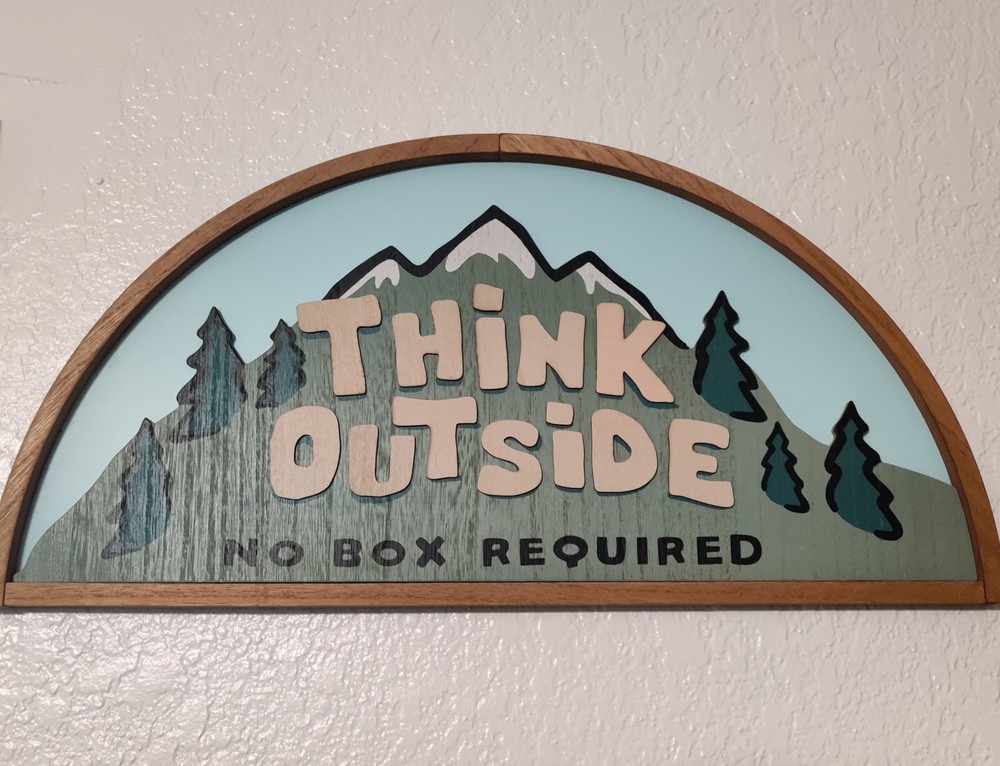 My daughter Emily’s mantra
Dennis Ayling
Dedicated to my family quartet